



search
date/time

Sat, 4:00PM
overcast clouds
11.9°C
NNE 10mph
overcast clouds
11.9°C
NNE 10mph
 | Sunrise | 6:35AM |
| Sunset | 5:03PM |  |

Steve Whitaker
Features Writer
@stevewhitaker1.bsky.social
P.ublished 17th December 2025
arts
Our Children's Playless Days: Snagged On Red Thread By Jazmine Linklater
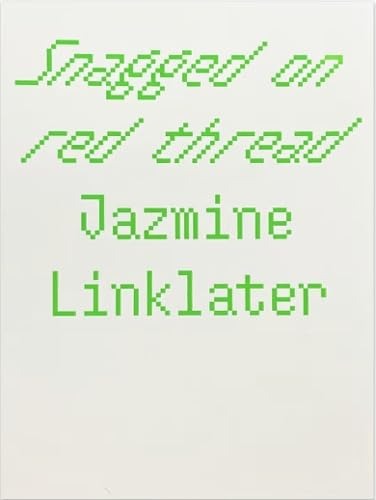
The incoherence is an inevitable casualty of the poet’s approach and it is a persuasive sacrifice to authenticity: her phrasing and syntax, the iambic rhythms that trundle along dusty roads like APC’s before coming to a standstill in the rubble, and the lineation that fragments like shrapnel, are all shapes of an insight that is knowingly percolated through several filters. Linklater has said that Snagged on Red Thread is a response to various art exhibitions and installations, and her narrative represents a conflation of those layers, interpolated amongst the televisual signifiers of carnage and detritus in Gaza and the wider Middle East.
Her passage through this land is as prone to fracture as the osteoporotic and war-torn body politic, yet there is sincerity in the clarity of description and an acceptance of tangential complicity that bespeaks psychological immersion, even at several removes. For the poem is also self-referential: the listing of facts and figures of direct complicity, of export licences for military goods and of the numbers of consequential dead in Gaza, are returned to the fact of the poem itself, its own inconsequence when measured against the piled bodies of Palestinian women and children. Linklater mirrors the sense of loss in foreshortened lines and disassociated phrasing, yielding a working recognition of poetry’s inability to do the tragedy justice:
‘When the poem collapses
it’s not how a building collapses.’
Encouraging the narrative to ‘collapse’ in on itself at certain moments, the poet is able to rebuild definition in the name of unwonted collusion:
‘This quadcopter holds a range
of payloads. I make Lightning
through PAYE, donating 15% of my income
for ejector seats, active interceptor systems, targeting lasers, weapon release cables
and rear fuselages in F-35 single-seat, single-engine, supersonic stealth strike fighters.
It is not possible to set conditions
on the use of these components.’
By the narrator’s own admission, the sale of her poetry books helps to fuel the export of arms, if only indirectly. What Linklater loses in subtlety in a journey marked by polemical asides, she regains, immeasurably, in the sibilant brutality of extended inventories like those shown above.
But what the reader is most likely to remember in this katabatic odyssey of dislocated tense, temporal shifts, personal reflection and inter-cuttings of the narrator/observer’s present, is the dark, continuous symbol that threads the narrative like a reminder: ‘Red on the canvas / Red on the building / Red on the plane’. The monochrome drumbeat is heavy but driven, adding insufferable weight to the canvas of death and destruction. The juxtaposition of the exquisitely domestic and the bloody consequence of war and occupation is wrought in words that offer consolation only as commemoration:
‘Diamonds frame her soft neck. Drop
from gold kites clasped in soft tissue
drop earrings drop not like a bomb
but its inference. Invulnerability flaunts
earlobe flesh not tearing in two the way
a bulldozer rips a kitchen in two
in a village it doesn’t believe in’.
More information here.
Also by Steve Whitaker...
Poem Of The Week: Facing The Music By Mairéad ByrneVenus At Midnight: The Amygdala Safari By Carmella de KeyserReview: Peas On Your Knees - A Life In The Poems Of Michael RosenPoem Of The Week: From Cheshire By Kit WrightPoem Of The Week: Among The Talk And The Laughter By Norman MacCaig (1910-1996)The shortened address for this article is: newspub.uk/01xrv