


search
date/time
Sat, 10:00PM
overcast clouds
19.7°C
WNW 5mph
overcast clouds
19.7°C
WNW 5mph
 | Sunrise | 4:29AM |
| Sunset | 7:50PM |  |
P.ublished 18th April 2026
scitech
Why Is A Pizza Like A World Map?
But you might have discovered that there’s a trick you can do to make the end of the pizza stay up: if you bend the crust of the pizza upward at the sides, the floppy end of the pizza is more likely to stick out straight.
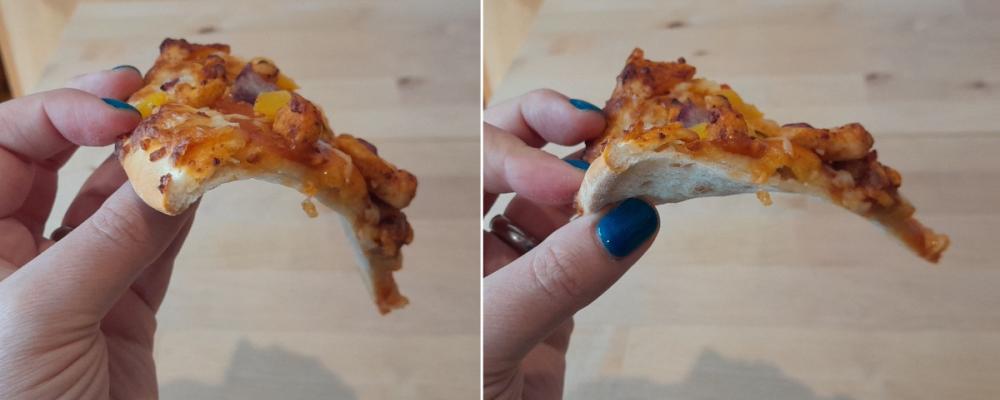
An important consequence of this (for pizza fans) is that if something is flat but flexible like a piece of paper, you can only bend it one way at a time. A piece of paper might be floppy, but if you roll it into a tube in one direction, it becomes much more rigid in the other direction - it’s more difficult to bend, without crushing or ripping the paper.
This is the same principle behind corrugated cardboard: the ridges in the corrugated layer make it much harder to bend the card in that direction, while it can still bend the other way. It’s also used in roofing materials and has other applications in construction and engineering.
And pizza follows these same rules: it can only curve one way at a time. If you bend the sides of the crust upwards, it’ll have less flexibility in the direction that’s at right-angles to the crust. If the pizza dough is too soggy, it might stretch and droop anyway - but for well-baked Italian-style thin bases, Gauss and his geometry can help you keep it under control.
The same mathematics - understanding how different shapes curve - explain why it’s so difficult to make a map of the globe. The way a sphere curves, in two directions at the same time, is fundamentally different to a flat piece of paper - so in order to make a true map of the globe, you either need to stretch parts of the Earth’s surface (resulting in Greenland looking huge on some maps, when it’s actually 1/14th the size of Africa), or make a map with gaps in, as though you’ve peeled the Earth like an orange.
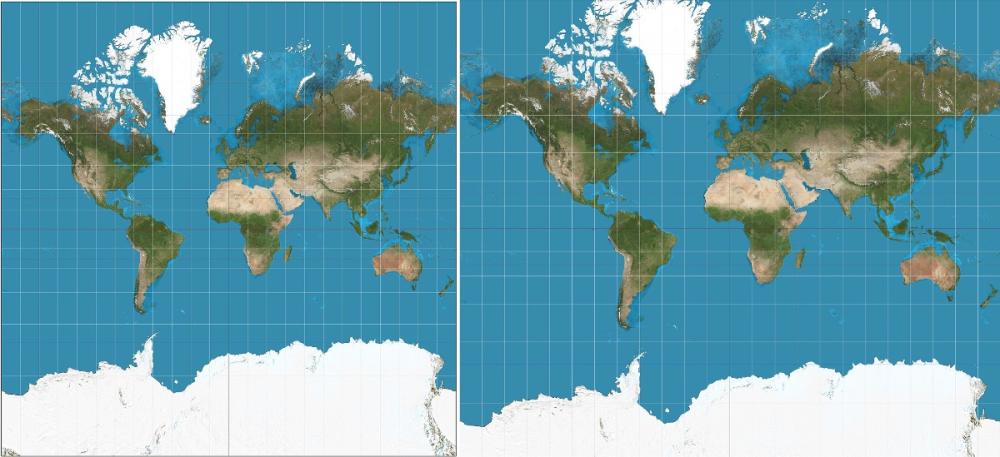
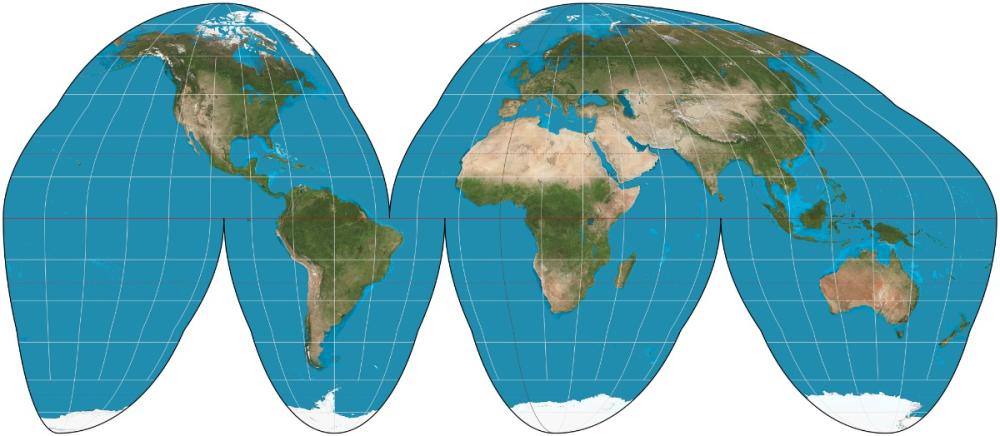
Source: Wikipedia user Strebe CC-BY-SA 3.0
Many different ways of representing the curved surface of the Earth on a flat page have been proposed - some preserve the area of the countries, which are more useful for political maps, and others keep straight lines straight, which helps with navigation. Which one is most useful depends on what you’re using it for.
So next time you’re sharing a pizza with friends, you can show them this trick and explain it’s thanks to Carl Gauss that we understand the mathematics behind how shapes curve - and why you can’t peel an orange and get a rectangle!
The shortened address for this article is: newspub.uk/01z4x
Search Results