search
date/time
 | Yorkshire Times A Voice of the Free Press |

Andrew Liddle
Guest Writer
P.ublished 24th January 2026
frontpage
Opinion
Two Men, One Talent: How Power Alienates By Misreading Consent
Andrew Liddle sees weird political parallels
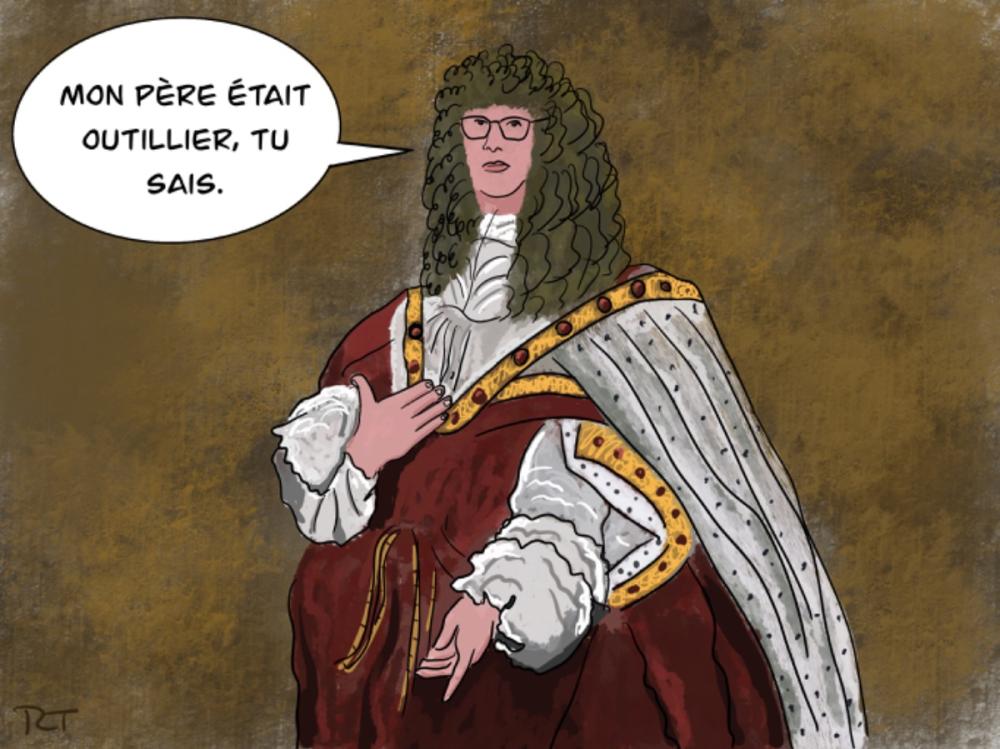
James ruled by divine right; Starmer by procedural authority. One wore a crown, the other a lawyer’s suit and regulation spectacles. Yet both share a peculiar political talent: the ability to alienate allies, embolden opponents, and exhaust supporters simultaneously, while insisting, in tones of calm reasonableness, that all is going according to plan, and any perceived faults are those carried over from the last lot.
James II’s downfall was swift because his errors were undeniable and implacably opposed to the will of the people. Crowned in 1685, he almost immediately broke assurances he had given Parliament and the political nation that he would rule by consent and not attempt to reintroduce Catholicism. His policies, unpopular as they were, mattered almost less than his insistence on using royal prerogative to override custom, law, and consent. By 1688, England did not merely distrust or dislike him; it pretty much hated him. When William of Orange came across from Holland with an army, the country responded not with resistance but relief.
Starmer’s achievement is more subtle and, in its way, more impressive. In less than a year, he has generated historically low approval rates. It goes without saying that all Conservatives (and conservatives) distrust him; many Labour members scarcely recognise the party they joined – and voters, struggling to fathom what he believes and will commit to, are turning increasingly to the Green and Turquoise, where in the late 1600s they might have thought the future orange.
Like James, he inspires not only opposition but ridicule – the most corrosive political force of all - whenever his name is heard. Both men were poor speakers and mistook the absence of open rebellion for consent. James believed silence meant acquiescence, bolstered by a conviction that authority declared was authority secured. Starmer appears to share a secular version of this belief: that process, legality, and stage-managed announcements can substitute for conviction, persuasion or shared purpose.
James II had a particular genius for turning manageable problems into existential crises. His Declaration of Indulgence, a religious toleration for Catholics by royal fiat, might have succeeded had it been negotiated. Instead, it was imposed. Parliament was sidelined, critics were threatened, and compromise was treated as weakness. Strength was applied precisely where tact and political nous were required.
Starmer’s errors follow the same pattern. In a broad church popular newspaper, the writer will spare the specifics, most of which are well known and understood, but suffice it to say our Prime Minister is ruthless on internal discipline, suspending, demoting and silencing his critics, but hesitant on public policy. Absurdist positions are adopted, often for transparently doctrinaire reasons or to appeal to his voter base, then defended without conviction, before out of expediency being reversed with solemn assurances that all is well. Where James blundered boldly, Starmer dithers, vacillates and reverse-ferrets, but both infallibly arrive at the least helpful outcome, the one most damaging to themselves and the country.
James II managed to offend Protestants by being Catholic, Catholics by being incompetent, Parliament by ignoring it, and the nation by behaving as though England were France. By the end, he achieved the near-impossible of uniting the country against him. Starmer’s offence is more evenly distributed. He alienates the left by purging it, the centre by draining it of purpose, and the right by offering no reason to reconsider their hostility. Trade unions, activists, MPs, and voters are assured their concerns are being listened to, even though they are ignored.
James not only created opposition but also the conditions in which it flourished. William of Orange, across the water, did not manufacture English discontent so much as give it direction. Modern politics shows the same pattern: figures, like Zack Polanski or Nigel Farage, originally dismissed as marginal or ‘looney’ (or worse) are encouraged and continue to grow in strength.
James believed absolutely in authority, specifically his own. He issued proclamations with serene confidence that announcement equalled obedience. When it did not, more proclamations followed. Starmer took power with similar authoritarian instincts, believing that his policies, many of them not heralded in the party’s manifesto, would be enacted. When opposition came even from members of his own cabinet, he attempted to manage them into compliance.
Press statements are to Starmer what proclamations were to James. Parliamentary debate is an afterthought and held in contempt. The assumption of both men is identical: if something is said authoritatively, resistance must dissolve. When it does not, the fault is assumed to lie in the way it has been presented by others, not in its lack of merit.
James II admired Louis XIV, the Sun King, the embodiment of absolute authority. He copied the French monarch slavishly and ended his reign dependent on French charity. Starmer’s admiration for Emmanuel Macron echoes this uncomfortably, with distinct similarities in executive tone without executive mandate, authority borrowed without the consent that sustains it, leading to widespread unpopularity.
James’s fatal misjudgement was attempting to remake England against its settled instincts. Starmer’s doctrinaire project is less theological but similarly tone-deaf: an attempt to impose socialist ideology and management politics on an electorate that instead is crying out for genuine purpose, clarity, a better standard of living and better services. He offers doctrine where people want direction, process where they want meaning, and solemn perversity where they crave hope.
James fled England in disguise, plotting comebacks nobody wanted. The country, freed of him, entered a period of constitutional stability and discovered it functioned much better. History is initially defined by the victors and the change of regime quickly became known as the Glorious Revolution.
Starmer’s story is of course unfinished. He may yet turn the country round, win over his manifold critics and gain further office, though history suggests that leaders who alienate everyone at once are remembered less for what they achieved than for the relief that followed their departure.
James lost his crown and barely escaped with his life. He spent the remaining years of his life in France. The next chapter in Starmer’s story is of course yet to be written but it is unlikely to be glorious, even though to some it appears to be revolutionary.