



search
date/time

Sun, 1:00AM
clear sky
10.8°C
SSE 6mph
clear sky
10.8°C
SSE 6mph
 | Sunrise | 5:56AM |
| Sunset | 5:54PM |  |

Jeremy Williams
Arts Correspondent
@jeremydwilliams
P.ublished 26th September 2026
arts
Twenty Years Of Squalor: Keith Murray On We Are Scientists, University Nights And The Art Of Time Travel
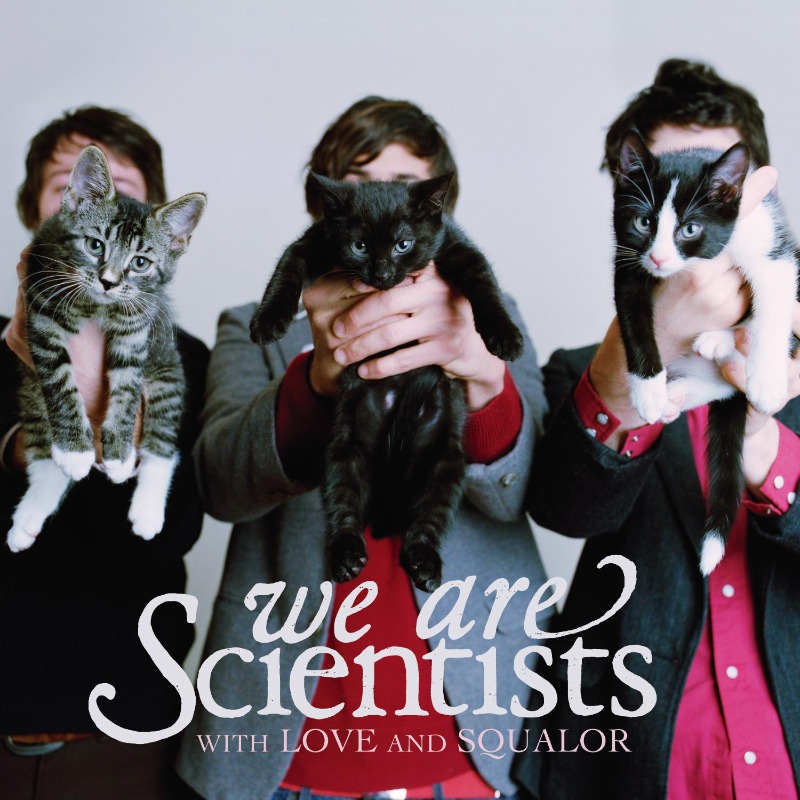
For me, We Are Scientists' With Love & Squalor belongs firmly in the latter category. Its arrival in 2005 is wrapped up in memories of university, nights out, crowded indie clubs and the particular kind of reckless optimism that seemed to accompany going out with very little money and absolutely no intention of being home before sunrise.
Which makes the fact that the album is now 20 years old rather difficult to process.
Twenty years.
I remember the record coming out. I remember hearing Nobody Move, Nobody Get Hurt, The Great Escape and It's a Hit everywhere. I remember the nights. And, perhaps most importantly, I remember being considerably younger.
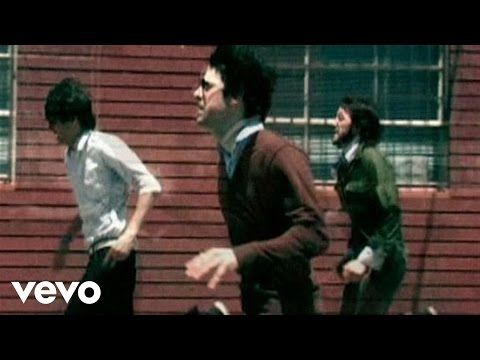
So, yes, the 20th anniversary has aged me.
I'm fairly certain I'm not alone.
Fortunately, Keith Murray is taking the whole thing with considerably more grace.
When we begin our conversation, the We Are Scientists frontman is asked if he's feeling brave. He pauses, before describing a mysterious sensation that washed over him when he woke up that morning.
Could it be bravery?
“Yes,” he decides. “Feeling braver than ever.”
It's a suitably absurd opening to a conversation with a man whose band has spent more than two decades proving that indie rock doesn't have to take itself too seriously.
The subject of bravery becomes particularly relevant when I ask Murray to define love. His initial answer is unexpectedly philosophical: love, he suggests, might involve “a certain euphoria” and giving oneself over to something communal and more otherworldly than simple physical desire.
Then he thinks better of it.
“Maybe it's simple, pure, carnal desire.”
Who is he to say?
This is Keith Murray, after all. We're unlikely to be getting a definitive answer.
Instead, we travel back to second grade, where Murray's first experience of puppy love involved a crush on Kimberly Wilson, who subsequently went out with his best friend.
It was, he says, a useful introduction to both sides of the equation: innocent crushing followed by the crushing realisation that things don't always work out the way you want them to.
His dating advice from there becomes considerably more hazardous.
Forget dinner and drinks. Murray's ideal first date begins with a chartered helicopter, champagne and a trip to the mountains. The prospective couple are informed that they're going wolf hunting from the helicopter. If they agree, the relationship is immediately terminated. If they refuse, they're told that the helicopter is actually taking them somewhere for off-piste skiing.
By this point, they've already finished the champagne.
Or Prosecco, if the helicopter has eaten too deeply into the budget.
Then they drunkenly ski down an uncharted mountain.
“If you survive this, you two are together,” Murray explains.
It's an impressively unhinged theory of romance, but Murray has a rationale. A relationship founded on shared trauma, he suggests, is destined to last.
“Bonded for life.”
There is, perhaps, a lesson here about why We Are Scientists have remained so good at what they do for so long. Their music can be smart without being po-faced, melodic without becoming predictable, and funny without turning into novelty. Even when the subject is something as well-worn as love, Murray finds a way to approach it from an unexpected angle.
Eventually, though, we steer away from helicopter-assisted romance and towards the reason we're really talking.
With Love & Squalor.
The album's 20th anniversary is being marked with a run of UK shows this autumn, and for Murray, the significance of the record has changed considerably since its release.
Back in the early 2000s, We Are Scientists were simply one part of a remarkably fertile New York indie scene. Interpol, Liars, The Rapture and countless other bands were all contributing to the sense that something was happening in the city.
Murray remembers it as a period of “indie rock explosions”, and the band didn't necessarily see themselves as standing apart from that movement.
“We kind of always just saw ourselves as being one of the two dozen New York bands that put out incredible records in the early 2000s,” he says.
That sense of being part of something bigger is important. At the time, With Love & Squalor didn't necessarily feel like a record that was going to define the band's career. It was simply their contribution to an already thriving musical moment.
Even the album itself, Murray says, initially felt like part of a “greater force”.
It took a few years for the band to realise that people weren't just responding to the wider scene.
They were responding to "them".
These days, Murray occasionally encounters younger musicians who tell him that With Love & Squalor was their favourite record at university.
His reaction is brilliantly conflicted.
“What? What about Fever to Tell, you idiot? That's a great record.”
It's a joke, but it also captures something quite lovely about the strange afterlife of a record. The band made it in one particular moment, yet it has since become part of countless other people's moments.
For me, that means university nights out.
For someone else, it might mean a first relationship, a particular city, a group of friends, or simply the soundtrack to a period of life that now feels impossibly distant.
That's the curious thing about albums turning 20. They stop belonging exclusively to the people who made them.
And perhaps that's why the band's decision to play With Love & Squalor in full on the anniversary tour feels so appropriate.
There was some discussion about how best to approach the shows. They could have scattered the songs throughout a career-spanning set, or simply made sure the entire album appeared somewhere during the night.
Instead, they've decided to play it from beginning to end.
Murray admits that they hadn't fully anticipated what that would feel like.
.png)
For roughly half an hour, it's time travel.
“It's kind of like time travel to that moment,” Murray says.
And that's exactly what the album has always done for listeners too.
The difference is that now the people on stage are travelling back with us.
Once With Love & Squalor is finished, the band will move through the rest of their catalogue, selecting around 40 minutes of material from the other eight albums.
That, Murray says, is where things get competitive.
“The stakes are high for that set.”
It's an enviable problem for a band approaching its third decade: having too much material to fit into one night.
There is also something reassuring about the fact that this isn't simply an exercise in nostalgia. We Are Scientists aren't putting themselves in a time capsule and pretending the intervening years didn't happen.
They have continued to make records, including Qualifying Miles, and the anniversary shows will bring material from that album into the same room as the songs that started the journey.
It's less a look backwards than a conversation between different versions of the band.
Naturally, I can't let Murray escape without asking which song from With Love & Squalor is his favourite.
This proves unexpectedly difficult.
His favourite to play is In Action, partly because it's one of the wildest songs on the record and allows the band to perform it with what he describes as a little extra gusto.
But then there's This Scene Is Dead.
That's perhaps his favourite song on the album itself — a slower burn that eventually explodes.
He has, in other words, managed to avoid answering the question.
“I know I took the cowardly approach,” he laughs. “I said I was going to be brave, but instead I split my vote between two songs.”
Eventually, I make him choose.
In Action.
It's probably the right way to end.
Because while there is plenty of looking back in celebrating With Love & Squalor — and plenty of us who will inevitably be forced to confront the horrifying fact that our university years are now two decades in the rear-view mirror — there is nothing particularly dusty about We Are Scientists.
The album remains energetic, funny and gloriously immediate.
And hearing those songs live again offers something more than simple nostalgia. It offers the opportunity to revisit a moment without pretending you can actually go back there.
For half an hour, perhaps, you can.
You can be back in that club. Back at university. Back among the friends, the noise, the late nights and the songs that somehow became the soundtrack to a life you didn't yet realise you were going to miss.
And if that makes me feel old, at least I know I'm not the only one.
Twenty years on, the squalor remains.
Thankfully, so does the fun.
WITH LOVE & SQUALOR - FURTHER CELEBRATIONS IN THE UNITED KINGDOM
SEP 30 Oxford - O2 Academy
OCT 1 Nottingham - Rock City
OCT 2 Liverpool - O2 Academy
OCT 3 Sheffield - Electric Studios
OCT 5 Leeds - Irish Centre
OCT 6 Newcastle - Boiler Shop
OCT 7 Birmingham - O2 Institute
OCT 8 Bournemouth - O2 Academy
OCT 10 Bristol - Electric
Remaining tickets on sale here:
https://wearescientists.com/#shows
Also by Jeremy Williams...
Albums: Carly Rae Jepsen Day and NightAlbums: Max McNown Leave On A LightAlbums: Lawrence Rothman Here Lies Love/Sawdust To StardustAlbums: Big Country Redux EastworldAlbums: Keo Put A Smile On For MeThe shortened address for this article is: newspub.uk/02123