



search
date/time

Fri, 7:00PM
light rain
14.7°C
SW 15mph
light rain
14.7°C
SW 15mph
 | Sunrise | 5:42AM |
| Sunset | 6:14PM |  |

Sharon Cain
Lifestyle & Travel Editor
P.ublished 18th September 2026
travel
Reflections On A Sensational African Safari
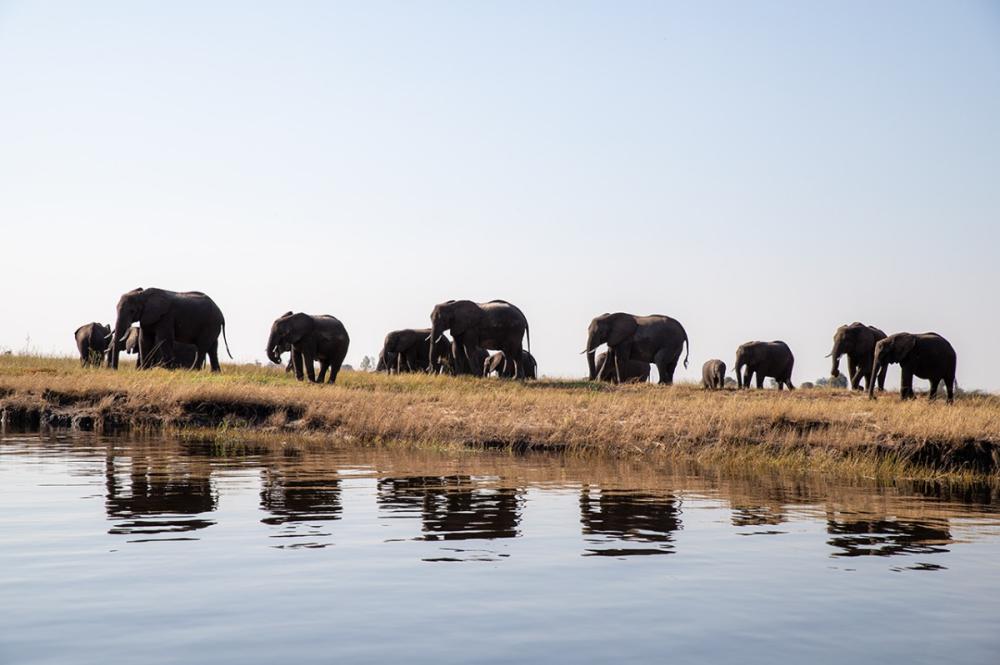
The Chobe River is a lifeline for elephants Images by Steve Hare
To celebrate a special milestone, our intrepid duo - Lifestyle and Travel Editor, Sharon Cain, and series Photographer, Steve Hare - embarked on a 17,000 mile adventure by air, land and water across seven African countries.
Their ultimate destination - the Serengeti on the Tanzanian/Kenyan border in search of the Great Wildebeest Migration, one of nature’s greatest phenomenon’s.
Starting out at the mighty Victoria Falls and a close encounter with angry male baboons, in the second of our series of articles, Sharon recounts their wildlife adventures in Botswana’s Chobe River wetlands and the Tarangire National Park in Tanzania.
Chaos Before Calm
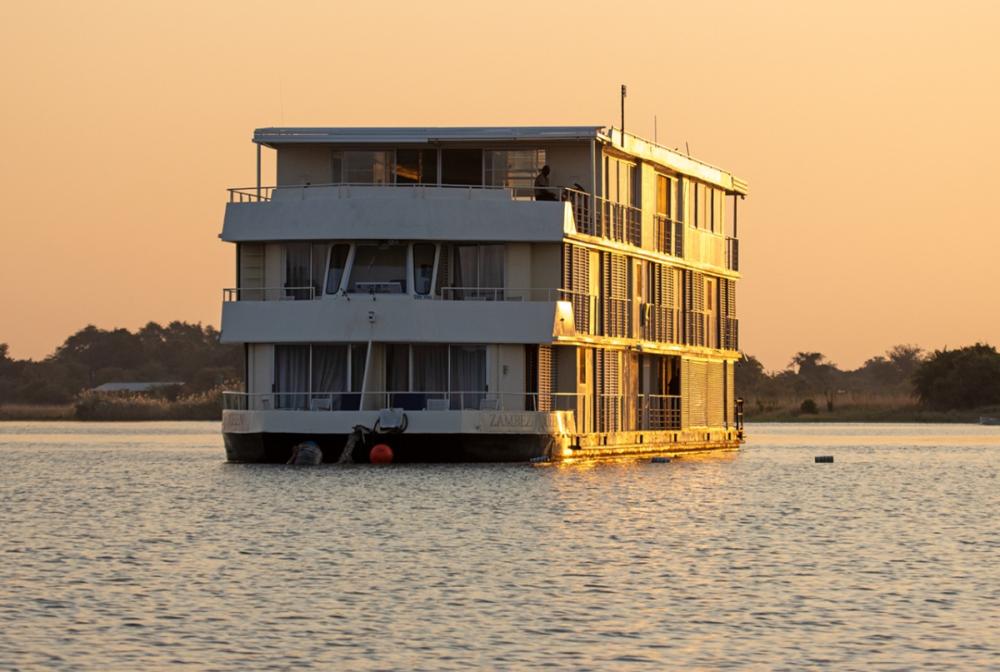
Immersed in nature: riverboats are ideal for watching wildlife
After exploring the Zambia and Zimbabwe side of the Victoria Falls, a Chobe River trip on the regally named Zambezi Queen beckoned. The concept conjured images of looking cool in a floating dress on embarking and greeted with a chilled glass of something exotic.
In reality, we arrived pouring with sweat and aching from been thrown around rickety roads for over two hours, which was compounded by being jostled in chaotic queues at two immigration points.
At the last checkpoint just off the river bank, we were left to bake in 45 degrees outside a dilapidated shack whose ancient, bulky, computer and its operator had also succumbed to the excessive heat and stopped working.
Finally onboard, long showers, a good dinner and decent Chenin Blanc revived us along with convivial conversation with our 26 fellow guests (no Brits) and affable crew. The air of expectancy was palpable.
Conservation Sanctuary
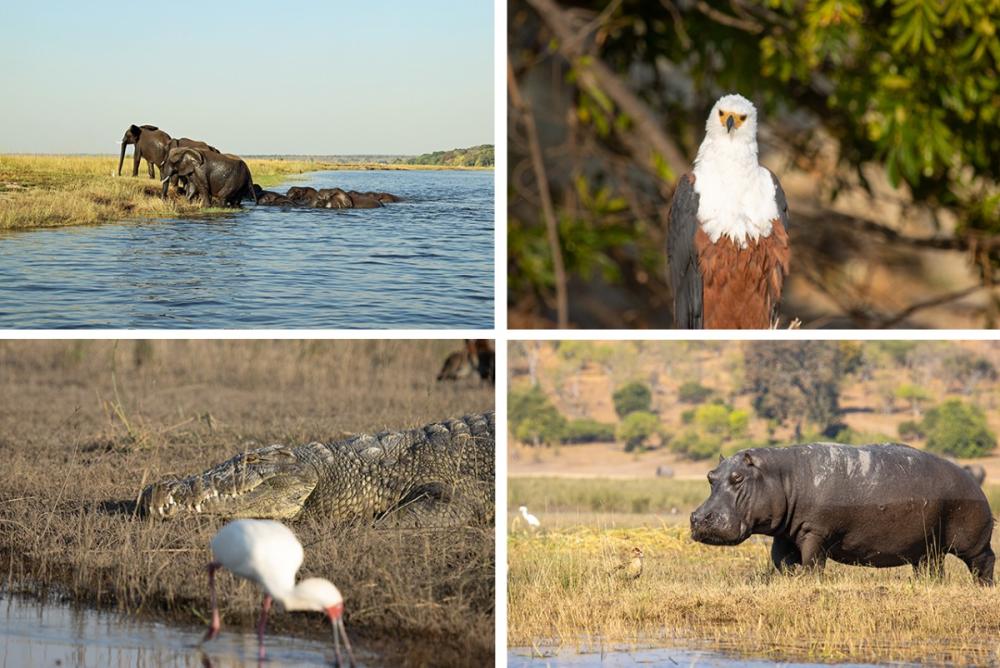
Clockwise from left : Elephant river crossing, African Fish Eagle, Hippopotamus, egret watched by a crocodile
It is also located within the Chobe National Park - a conservation sanctuary of 4,500 miles with wildlife including lions, cheetahs, buffalos, hippos, crocodiles, and over 450 bird species.
Also called the ‘Land of the giants’, the park houses the planet’s largest concentration of African elephants - 120,000 - for whom the river is a lifeline, especially in the dry season from April to October.
Tragically, the gentle giants are vulnerable to poachers and the park’s deterrent measures include anti-poaching patrols, a shoot-to-kill policy and military support.
Elephants making a splash
The dexterity with which they heaved their enormous bodies - the males can weigh up to six tons - onto the riverbank was extraordinary.
Ensconced in our own private ecosystem, we were privy to gentle gazelles bounding along the riverbank and hippos, giraffes, and crocodiles chilling out.
High densities of hippos and Nile crocodiles reside here and my heart pounded wildly as a crocodile eyed up an egret who was oblivious to its close proximity to becoming a mid-morning snack.
An African fish eagle, cormorant and black winged lapwing were among the beautiful birds soaring above us.
Worlds Apart: River Communities And Customs
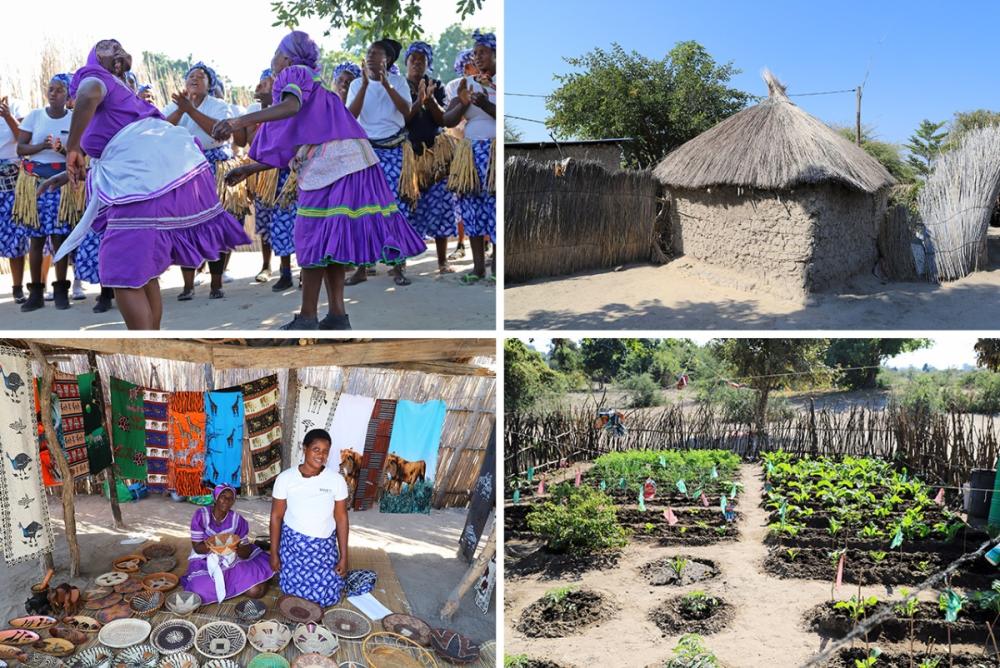
Clockwise from left: tribal dance, humble homes, arts and crafts and communal vegetable plot
Men fish, play pool, and socialise in the local bar; women tend to the crops, battle the relentless dust and look after the children.
Always deferring to the men, they can swiftly become a divorcee if their spouses think they have become lazy. You can imagine the expressions of disbelief this information elicited from our group.
More recently, progress has seen women working with the elders and contributing to governance. Passing on their skills, the elders play a formative role in preserving customs through storytelling.
There are no secrets in these communities where basic bamboo fences are a token nod to privacy from neighbours.
Women cook on the floor outside their huts and mother nature fulfils basic requirements. It was fascinating to watch shampoo being made from herbs and water, and touching to see their pride in a thriving communal vegetable patch.
Adorned in vibrant purple and white traditional costumes, the women danced and sang for us in an upbeat display. We donated to the village upkeep and bought a wood carving of a family of giraffes. Interestingly, the crafts were imported and not home-made.
Bewitching Hour
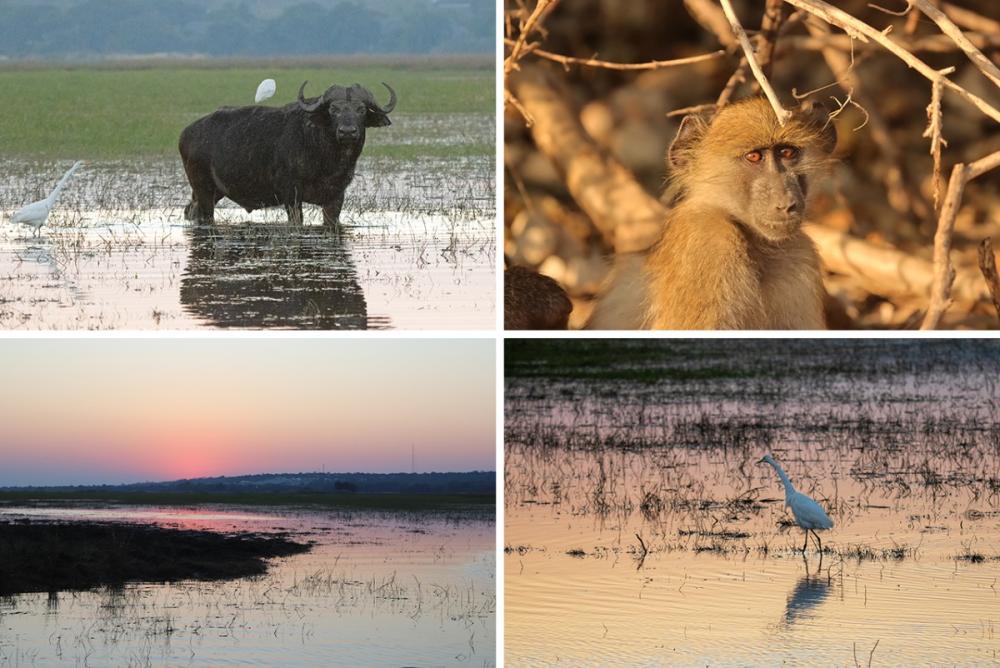
Sunrise and Sunset : Clockwise from left: buffalo with egret, monkey, egret, sundown over the River Chobe
The dangers at dusk were also apparent when we locals were illegally fishing with a flimsy rod from the riverbank as they are vulnerable targets for prey like snakes, hippos and crocodiles.
Darkness saw the volume of insects increase on the riverboat. We abandoned our table one night due to the prolific volume of weird and wonderful pests congregating around our food. A menacing looking creature suffered a swift demise in my tomato soup.
Over the course of three days we shared adventures with fellow travelholics from across the globe before the next safari – and country – beckoned.
North Tanzania’s Expansive Plains
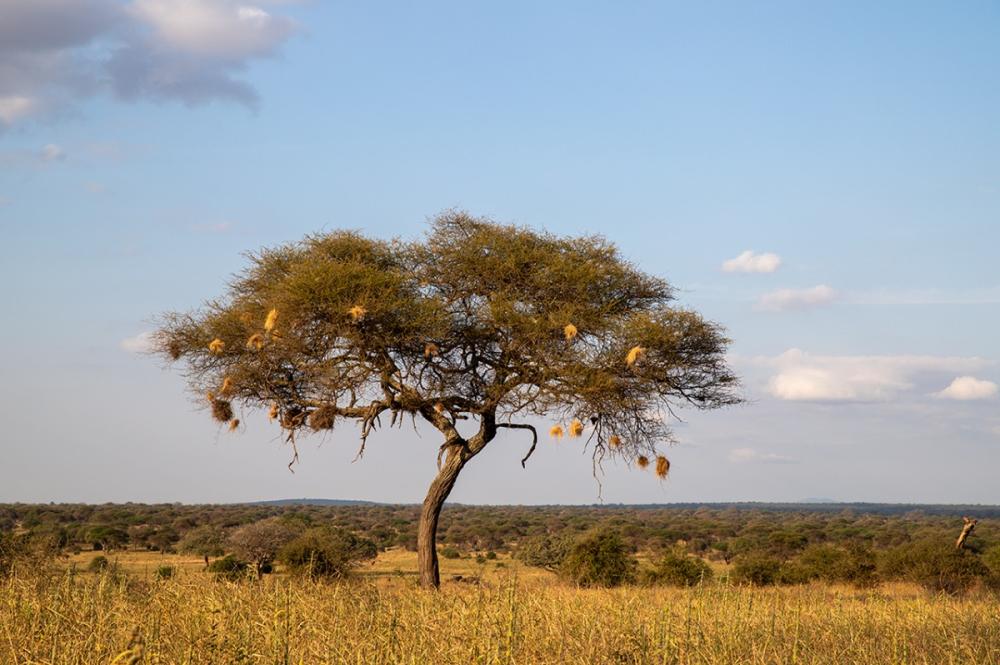
Iconic Baobab ‘Tree of life’ in Tarangire National Park
In the Tarangire National Park, Baobabs, the ‘Tree of life’, dominate the landscape. Some are over 1,000 years old and their life-enhancing functions are integral to the wildlife’s wellbeing.
Storing water to last through the dry season, elephants strip their bark to access the water in the trunks, buffalos and giraffes graze on their leaves, and birds - including the Kori Bustard and Yellow-Collared Lovebird - nest in them.
Named after the Tarangire River which winds through the Northern circuit, the park’s diverse landscapes across 1,770 glorious miles span swamps, granite ridges and river valleys.
Playtime And Predators
A troop of baboons on the move
Large troops of olive and yellow baboons hang out among the park’s baobab trees and termite mounds – the latter which are also in plentiful supply.
At night they avoid their predators, mainly leopards, lions, and rock pythons, by retreating to steep cliffs or up tall trees from where the males keep watch over the terrain.
During the dry season, predators large and small seek their prey near the river and swamps, while cheetahs opt for high speed chases in open plains.
Gentle Giraffes: World’s Tallest Mammal
Giraffes can cruise at ten miles per hour
The herbivores roam across acacia woodland, baobab savannas, and open plains, surviving on leaves, flowers and shoots.
Acacia trees are their favourites and their long necks enable them to reach food in the highest branches.
Known as ‘power nappers’ they only sleep for between 30 minutes to two hours a day - and sleep standing up so they can move quickly when predators lurk.
They can grow to eighteen feet tall and mums give birth standing up which means the calves experience a six foot drop on entering their world. They melted my heart every time we spotted them.
Highlights and Delights
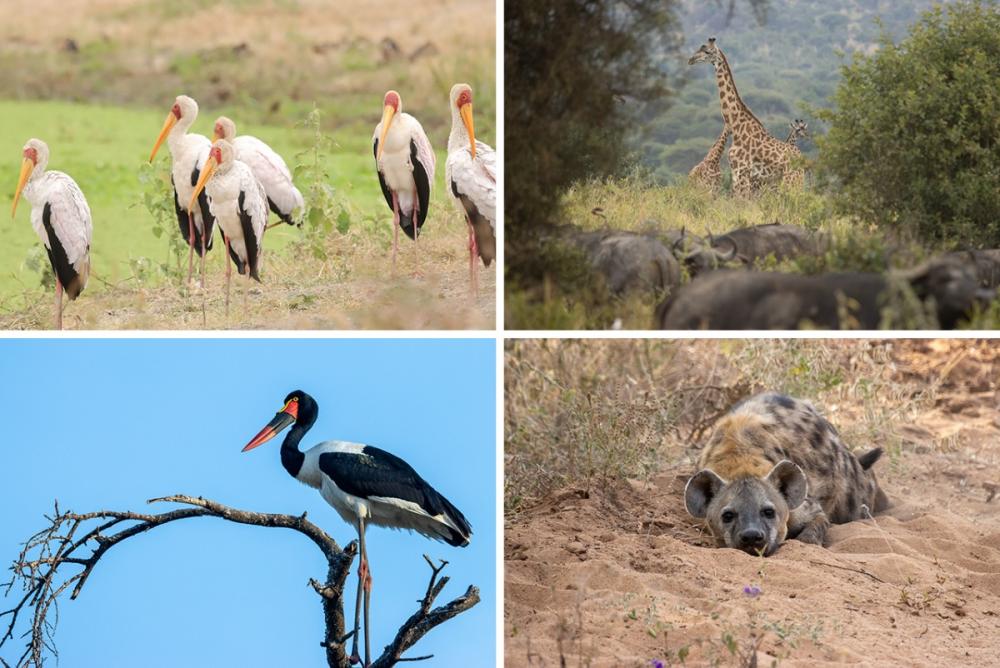
Herbivores and carnivores: clockwise from left,
yellow billed storks, giraffe and buffalo, Hyena, Saddle billed Stork
To save time driving back to the lodge for lunch at Tarangire, our group opted to enjoy a picnic lunch. Expecting a sandwich and bit of cake, our knowledgeable and companionable guide Alfonso produced a sizable hamper from the jeep.
Coconut chicken and rice concocted by the chef at the lodge tasted delicious in our tropical savannah surroundings.
Travellers expectations are understandably high on safari. While game spotting at sunrise every morning increases the chances of success, nothing is guaranteed. With this in mind, we set out to appreciate what we saw as opposed to bemoan what we didn’t.
Herd Traditions and Rituals
Going nowhere and kicking up dust
Alfonso explained that when the males reach eleven year’s old, they are turned away by their herd to ‘man up’ and find their own path in the world. We watched with bated breath and angst as he tried to re-join his family and was again rejected.
Unhappy and annoyed, he made it clear he was staying put on the road - so the increasing queue of jeeps in front of him and behind him were going nowhere either.
Finally moving, he headed towards us, prompting a quick getaway. Despite their size, elephants can move at 15 miles an hour.
Happy families on the move
I fell totally in love with these largest living land mammals who are equipped with a ton of intelligence, compassion and self-awareness.
As manifested by the distressed young male, they demonstrate their emotions. They are also known to cry when mourning a family member.
The age-old phrase ‘an elephant never forgets’ is totally true. Their phenomenal faculties help them to remember where vital watering spots are located and their traits provide valuable lessons for us mere humans.
These experiences had been profoundly emotional and I welcomed the opportunity to process them en route to our next adventure further North in Tanzania’s Norongoro Crater.
Our final destination would be the Mara River in the Serengeti on the Tanzanian and Kenyan border.
Here we would have just 24 hours to possibly witness the awe-inspiring spectacle of The Great Wildebeest Migration - the largest herd movement of animals on the planet.
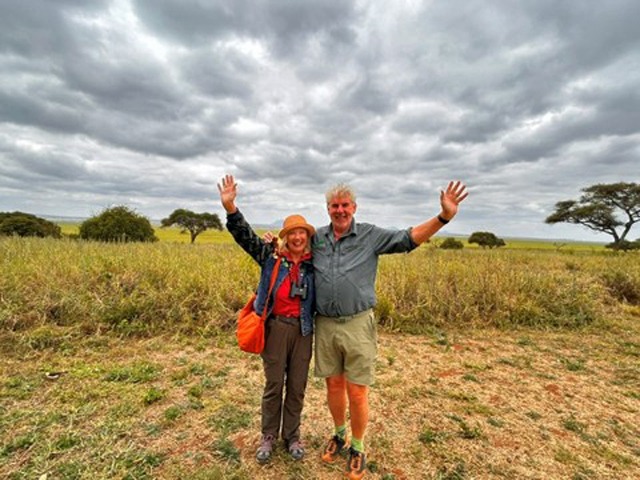
Operators including Safari Rangers offer Tanzanian/Serengeti safari packages
Chobe National Park | Botswana Tourism Organisation
Zambezi Queen Collection | Luxury Chobe River Safaris
About Tarangire National Park - Tarangire NP
Tours & Safaris - Ranger Safaris Ltd Tanzania
Also by Sharon Cain...
The Anastasia File: Imperialism, Evil, Fact And FictionMotorhoming Switzerland: Mingling With The Rich In St MoritzLush Islands, Medieval Walls, Cascading falls: Croatia's Sensory FeastGruesome, Grisly, Gory : The Silence Of The LambsBeautiful, Vibrant, Bold - So Why Does Barbados Leave Me Cold?The shortened address for this article is: newspub.uk/020xv
Search Results