



search
date/time

Sat, 7:00AM
scattered clouds
10.2°C
W 14mph
scattered clouds
10.2°C
W 14mph
 | Sunrise | 6:22AM |
| Sunset | 5:20PM |  |

Andrew Liddle
Guest Writer
P.ublished 25th August 2026
sports
Obituary: Sir Billy Boston - The Wigan Warrior
Andrew Liddle remembers one of Rugby League’s great players who died today
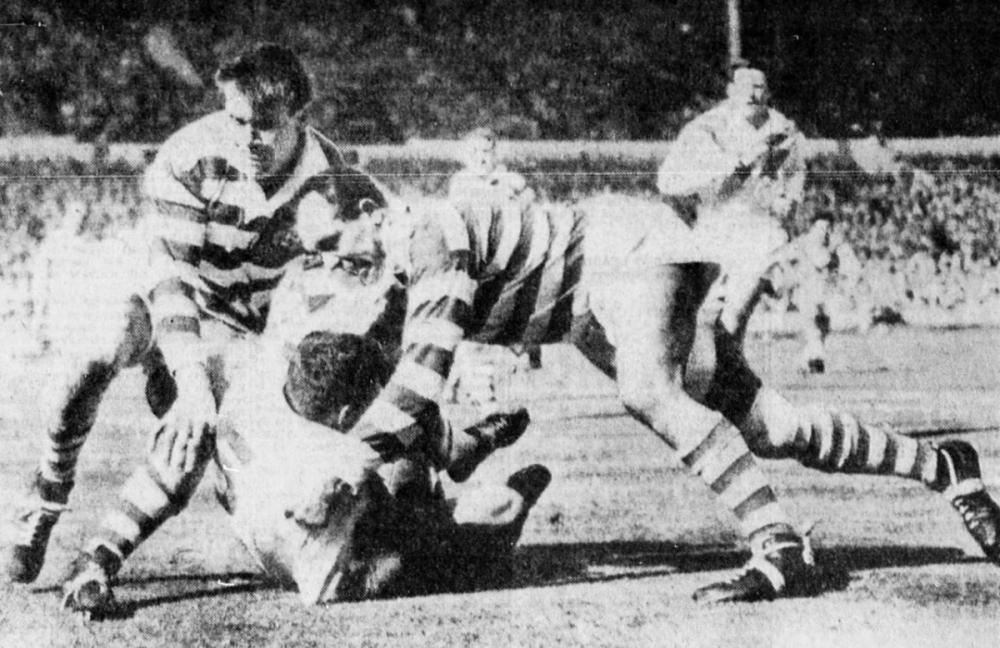
Boston tackling Wakefield Trinity player Gert Coetzer during the 1962–63 Challenge Cup final
Billy Boston was one of those rare players who could make a crowd rise before he had even received the ball. Once he got possession and found a bit of space, you knew something was about to happen. When he played against my team, Bradford Northern, I always had the sinking feeling that it was inevitable he would cross the line. The only question was how many tries he would score.
There were faster wingers. There were players selling more elaborate dummies and with perhaps greater natural side-stepping elusiveness. Boston's great weapon was power. He ran hard, straight and with an almost irresistible momentum. Defenders could throw themselves at him, but bringing him down was another matter altogether.
No one in the history of the game was more prolific over such a long period. In 488 appearances for Wigan, he scored 478 tries, a remarkable record that tells only part of the story. Across his career he scored 571 tries, a figure surpassed only by the great Brian Bevan. But statistics can never quite capture the excitement of watching him play.
You had to see that magnificent, powerful figure gathering speed down the touchline, defenders closing in from all sides and Boston somehow blowing them away. Actually, when he crossed the line, there was almost a sense of anticlimax, such was the sense of inevitability.
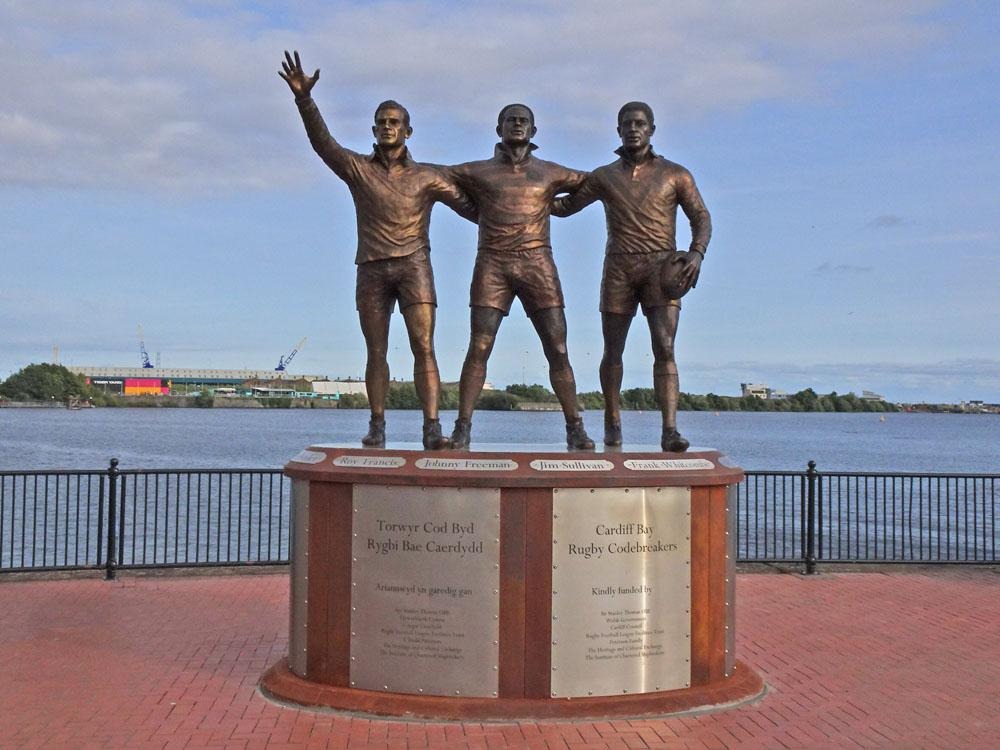
Boston (together with Gus Risman (left) and Clive Sullivan (right)) features in the Codebreakers Statue in Cardiff Bay.
Photo credit: Sionk
For the next 15 years he became undoubtedly the most recognisable figure in rugby league. Though Wigan was his club, he belonged to a much wider audience. People paid to see him and he always guaranteed a bumper crowd. His performances made him the undoubted star of the sport that was gaining national fame because of the BBC’s decision to broadcast it live on Saturday afternoons, compèred by the legendary Eddie Waring.
In 1954 he became the first Black player selected for a Great Britain rugby league tour of Australia and New Zealand. He scored 36 tries in 18 matches on that tour - an astonishing achievement - and in doing so broke a significant racial barrier at a time when a degree of prejudice was not unknown.
He went on to win 31 Great Britain caps and was part of the side that won the 1960 World Cup. He scored in the final against Australia, another glorious moment in a career filled with them.
Yet what makes Boston's story particularly remarkable is that he never seemed to carry himself like a man who knew he was making history. There was no great ego about him and when he signed my autograph book in 1962, he accompanied it with a broad smile and friendly pat on the head. From all accounts, he was a quiet, modest and immensely likeable man. The ferocious competitor who could terrorise defenders on a Saturday afternoon was, away from the pitch, gentle and self-effacing.
Though an absolute handful on the field, there was never anything unpleasant about the way he played. He was a superb athlete, a wonderful entertainer and, above all, a sportsman who clearly enjoyed the game for what it was.
Wigan became his home and remained so for the rest of his life. He was embraced by the town and, long after his playing days were over, remained one of its most cherished sons.His achievements were eventually recognised with the MBE, induction into the Rugby League Hall of Fame and numerous other honours, including the ultimate recognition. In 2025, he became the first rugby league player to receive a knighthood.
It was a fitting honour for a man whose influence extended well beyond the rugby field. He had been a pioneer, whether he wanted that description or not, and the generations of Black players who followed him owed something to the path he had helped open.
For those of us who stood on the terraces when he was in his prime, there are memories that will never disappear. The sight of the enormous winger receiving the ball … his surge down the wing … defenders converging … the growing roar from the crowd … then, almost inevitably, Boston crossing the line, making the hardest and the most thrilling business in rugby league look almost effortless.
Welsh-born Sir Billy Boston was a Wigan Warrior in every sense. His passing today at the age of 92, a matter of only 4 days after the death of his wife, Joan, is a loss not just to Rugby League but to the whole world of sport.
Also by Andrew Liddle...
Why Nostalgia Is Thriving In The Digital AgeWhen Historians Start PratingA Tour De Force – Charlie Connelly’s attention All Shipping reaches ScarboroughBob Davenport : From Gateshead To NewportThe Trial Of Romeo Oscar - Stephen Joseph Theatre, ScarboroughThe shortened address for this article is: newspub.uk/020q1