



search
date/time

Mon, 1:00PM
overcast clouds
15.8°C
SE 7mph
overcast clouds
15.8°C
SE 7mph
 | Sunrise | 3:31AM |
| Sunset | 8:37PM |  |

Jeremy Williams
Arts Correspondent
@jeremydwilliams
P.ublished 15th June 2026
arts
In Conversation: Micko & The Mellotronics
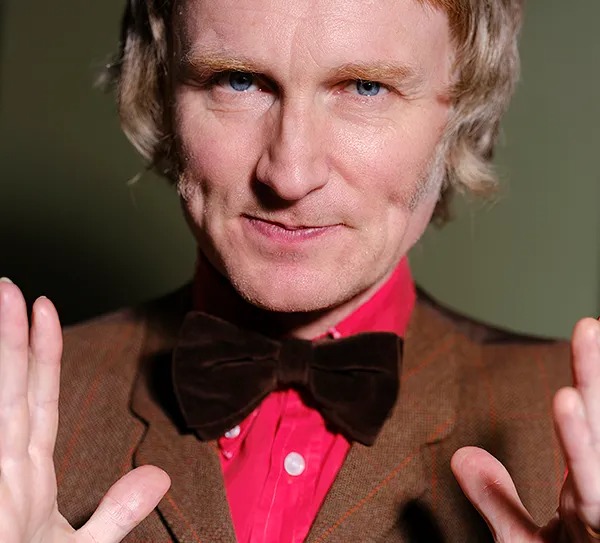
Micko & The Mellotronics
The title, paired with the cover art of Sooty surrounded by two deities, was painted by my first art tutor, Garry Barker (Leeds College of Art), it invites projection and ambiguity. You're right, I found this interesting. It held a certain mystery. For me, it spoke of venturing into the shadows to care for my mother, who has Alzheimer’s. Anyone who has experienced the journey knows how complex it can be. The meaning has shifted somewhat because many people point to it as the conclusion of a circle of three records. I’m just getting started, though.
Your music moves between ’70s new wave influences and more contemporary sounds. How did you approach blending those styles while keeping a consistent identity?
It’s the voice behind the songs, the subject matter that provides the consistency.
The album explores childhood memories of Leeds. Are there any specific experiences or places that directly inspired particular songs?
Yes. I was brought up in a Barrett house in Moortown, which was considered almost 'posh' back then. There’s a mention of Marlene’s Coiffure (that’s French for hairdresser!), so in the ’70s and ’80s the neighbourhood was aspirational. Cinderella’s Rockerfellas, at the top of the Merrion Centre, owned by Peter Springfellow, also features. There’s a reference to the viewing track overlooking Leeds Bradford Airport, a discreet place where you were unlikely to be seen. Mother Shipton gets a mention too when, like the teddies placed near her well, relationships can turn to stone.
My brother, Wash Westmoreland, was given the keys to the City of Leeds by the Mayor for directing the feature film Still Alice with Julianne Moore ten years ago. I don’t need them, though — I can borrow his if needed.
The artwork featuring Sooty alongside deities is quite striking. What was your first reaction when you saw those paintings, and how did they shape the album’s direction?
As mentioned above, Garry Barker, my art tutor, was recovering from a car accident when he painted those images. Without going into too much personal detail, as a young parent dealing with my father’s death and my mother’s Alzheimer’s, I felt I was being pulled in several directions at once. Those experiences powered the work to a great extent.
When I wrote the first track, for example, Guilty, about Ruth Ellis, I identified with a working-class mother trying to improve life for herself and her son while facing many prejudicial obstacles. I now live in North London, not Leeds, and Ruth Ellis was hanged close to where I live.
You mention themes of rebirth, recovery, and excavation of the past. Were there any moments during the writing process that felt especially revealing or transformative?
Would You Believe It was a song based on an expression my dad gave me while in hospital; it was about the way he said it. I dovetailed that experience with the birth of my son in the track, so it’s full-circle stuff — the grand life narrative.
There are quite a few deaths written about on the album, but in a Jungian sense, it’s not all grief-based. I try to write from a non-attached perspective, with the emotion spilling out of the sides. I find the songs build better that way and ultimately have greater impact and depth. I find a lot of emoting in modern music but it’s not always clear what they are so upset about.
Chris Kimsey praised the record’s honesty and authenticity. How important is vulnerability in your songwriting, especially at this stage of your career?
Chris executive-produced the record and was very involved. I was highly flattered, as his CV is incredible; he has worked with The Stones, among others. Vulnerability is only as important as any other aspect of expression; it depends on what’s being discussed.
If vulnerability is shown, it’s not with the deliberate intention of triggering sympathy. I’m interested in ideas, but I place them in a dreamlike, often abstracted, expressionistic way.
There’s a strong narrative element, but several of the pieces are deliberately left out—missing—and they’re for the listener to figure out. There has to be plenty in it for them; otherwise, why would they be interested?
It gave the record a sense of urgency. There are moments in life when you’re forced to act because you realise that if you delay, you may spend forever contemplating the pause.
You describe the songs as being inhabited by mysterious characters. Who are these characters, and what role do they play in helping you tell personal stories?
That would be giving the game away. It’s very important not to over-explain a song, in my view. It’s not a literal thing, after all.
The lyrics are loaded with subtext, triggers, and phraseology designed to pull the listener in. Most of the ideas are prompted by personal experience or something one step removed. Ultimately, I suppose they help me evaluate my place in the world – where you sit in relation to everything else, try to make sense of it all. I believe everyone, to a greater or lesser extent, is on that journey.
Recording at home can create a very different atmosphere from working in a traditional studio. How did the home-recording environment affect the album’s sound and mood?
I’ve always worked from home. I’m originally a ’90s bedroom musician. You don’t get the push and pull of everyone playing together in one room, but you do get greater sonic control and, I find, a more three-dimensional sound environment as a result. Coming from electronica originally, that’s my preference.
Paul Cuddeford (The Boomtown Rats) contributed to arrangements as well as guitar work. How collaborative was the creative process across the band?
Working with Paul is great — he’s extremely talented. I’m very grateful to all the players who contribute their talent. Budge Magraw and Jan Noble (both ex-Cesarians) make an excellent rhythm section. Paul would send me audio remotely; Budge and Jan would come over and make contributions.
I work on the Mellotronics material all the time. I’m growing it organically day by day, whether that’s a lyrical adjustment or re-recording a guitar part. What did Michael Caine say in Get Carter? “For me, it’s a full-time job.”
Many artists write about politics in direct terms, but you’ve described your lyrics as dealing with politics with a small ‘p.’ What does that approach mean to you?
I write in a contemplative way because the world is complex. The small 'p'; is about observing behaviour and offering social commentary: what motivates people, what’s seen, and what’s left unseen. If people don’t understand that, that’s absolutely fine; it’s there for those who wish to look. I try to make the songs like a wedding cake, with many layers. If you only clock the figurines on the top level, great — don’t they look nice?
I like the writing of fellow Yorkshireman Alan Bennett, by the way. I read him a lot. There’s a North London connection there too.
As audiences prepare to hear the album live at venues like the Dublin Castle and Aces & Eights, which songs are you most excited to perform, and why?
It’s really about what the audience is digging. It’s a feedback loop – we play best when they’re feeling it. I’m looking forward to working up Mystery of the Night for live performance; that closes the record. That’s a song about transcendence; deep down, that’s what we’re all looking for!