



search
date/time
Tue, 10:00AM
light rain
15.8°C
WSW 5mph
light rain
15.8°C
WSW 5mph
 | Sunrise | 6:14AM |
| Sunset | 5:30PM |  |

Artis-Ann
Features Writer
P.ublished 25th March 2025
arts
Guardians Of Justice: The Secret Barrister: Stories Of The Law And How It’s Broken
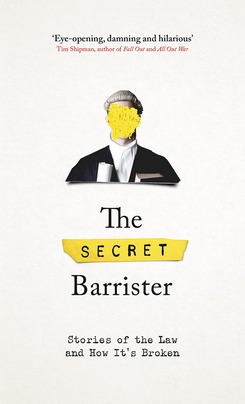
We’ve all been in the court room, via television at least. Among others, Kavanagh QC, Judge John Deed, Law and Order and, if you’re old enough to remember the lunchtime offering, Crown Court, have all shown us what happens both in court and behind the scenes. We’ve witnessed the highs and lows, justice and injustice meted out, sometimes in equal measure, as well as the arguments between learned colleagues. It makes for great drama and entertaining viewing.
The author of this prize-winning non-fiction book is, as the title might suggest, cast in anonymity, and I can understand why, since he (funny that I naturally assume it’s a male) lifts the lid on the judicial system in this country, revealing its flaws and quirks for all to see.
...he (funny that I naturally assume it’s a male) lifts the lid on the judicial system in this country, revealing its flaws and quirks for all to see.
We get a potted history of the legal system in England and Wales. Eye-watering sentences of the past now reduced to more humane terms of imprisonment, or other sanctions. There are surprises along the way, too; I didn’t realise that the two-tier system of Crown Court and Magistrates as we know it today, only came into being in 1971.
Then there’s an introduction to the characters who perform a role in a court case, what they do, how they behave (or in some cases, how they should behave). ‘The full spectrum of human behaviour’ can be observed, appropriate or not, it seems. It looks at the legal process from Magistrates Courts through Bail and Remand to Trial and Sentencing as well as considering the role of the Crown Prosecution Service. Some parts are more accessible than others. An occasional focus on victims makes it more human.
The book is eye-opening, at times shocking and definitely thought-provoking. It should be of interest to all of us ...
The book is eye-opening, at times shocking and definitely thought-provoking. It should be of interest to all of us unless we can guarantee that we will never be the victim of crime, will never commit a crime of negligence, or never be in the wrong place at the wrong time resulting in our facing a wrongful allegation. Perhaps, though, that’s why other institutions get so much more press coverage and political attention than the legal system: as individuals, we are more likely to have personal experience of the NHS and we all have a personal investment in education, but the law? Until you find yourself embroiled in it for one reason or another, it feels like the criminal justice system is for other people. But SB tells us that innocent people and victims, as well as the guilty, are being failed by the system, that there are fundamental flaws which fail people all the time. I was, at various points, both shocked and outraged to hear about the ways in which this happens and how inaccessible legal representation can be to a growing number of people. Acquiring legal aid appears to be a minefield and if you pursue a matter at your own cost, there is no guarantee of recompense if you are ultimately found to be innocent.
I was, at various points, both shocked and outraged to hear about the ways in which this happens and how inaccessible legal representation can be to a growing number of people...
The book is interesting though despite the title, anecdotes are few; it is fascinating, informative and at times, hard-hitting, and it is a hard read, written with much the same dryness we might associate with dusty old legal tomes. As I said at the start, it requires time and concentration if you’re going to get through it, but it is a worthy read.
Also by Artis-Ann ...
A Tale Of Death And Life: The Mourning Necklace By Kate Foster…And All That: Bayeux Tapestry The Epic Poem By Martin KiszkoIn For A penny…: In A Summer Season By Elizabeth TaylorThe Suitability Of Love: No Fond Return Of Love By Barbara PymThe Power Of One Voice: Camino Ghosts By John GrishamThe shortened address for this article is: newspub.uk/01u6f