



search
date/time

Sat, 1:00PM
few clouds
19.6°C
NW 6mph
few clouds
19.6°C
NW 6mph
 | Sunrise | 4:42AM |
| Sunset | 7:35PM |  |

Andrew Palmer
Group Editor
P.ublished 15th August 2026
arts
Review
Classical Music: Spice Of Italy - Music For Violin And Continuo
Matteis Sr., Set of Movements in D minor; Set of Movements in E minor (1685); Set of Movements in F major; Variations on La Folia; Ground after the Scotch Humour in F major; Set of Movements in G minor; Set of Movements in G; Matteis Jr., Sonata in C minor; Sonata in A major
Duo Dorado
Chandos CHAN 0831
Violin Hazel Brooks by George Miller, English, c. 1670 (Matteis Sr) by Joannes Georgius Thir, Vienna, eighteenth century (Matteis Jr)
Harpsichord David Pollock double-manual, Flemish / French instrument, by Anne and Ian Tucker, 1999. Replica of Ruckers-Hemsch, 1636 / 1763. Organ David Pollock continuo organ by Henk Klop Orgelbouw, 2007
Chandos.net
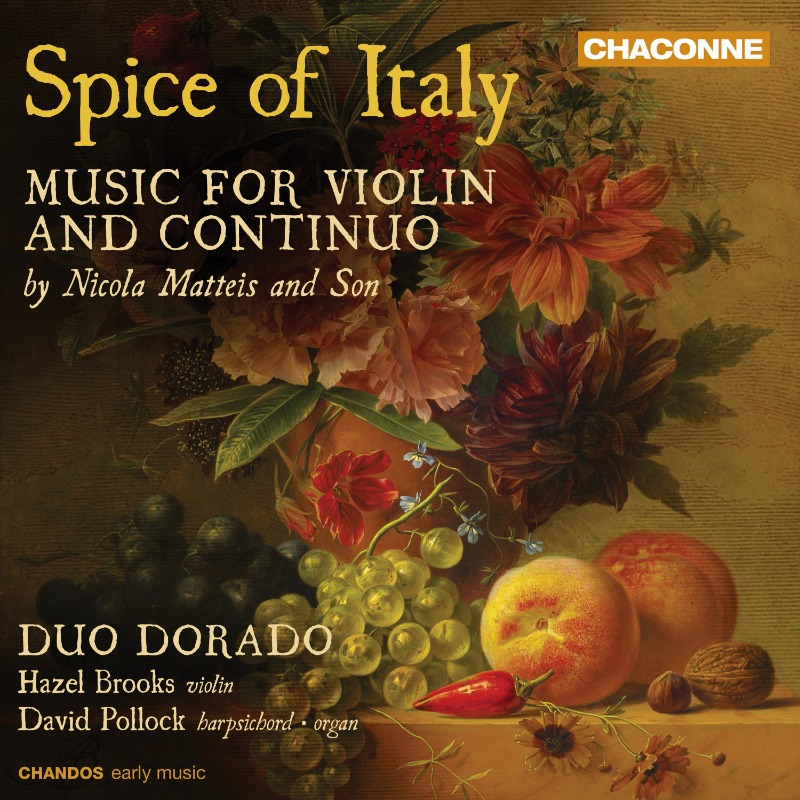
French taste ruled Restoration England, and nobody there had heard anything like him. Within a few years he'd turned the city's ear decisively towards Italy — so thoroughly that Roger North later grumbled nothing in town "had a relish without a spice of Itally." That line gives Duo Dorado their title, and it turns out to be a fair description of what's inside too.
Following their fine disc of Gottfried Finger's violin sonatas (CHAN 0824), Hazel Brooks and David Pollock turn to Matteis Senior and his equally gifted, far less remembered son. It's overdue: both men built careers a long way from home, and both have paid for it ever since — too foreign for English musicology, too forgotten back in Naples. This recording won't fix that on its own, but it makes a persuasive start.
Brooks's technique is never in question — the passagework is crisp and cleanly articulated throughout — but what lingers is the range of character she finds in music that could easily become a blur of ornamented sameness in lesser hands. The Ground after the Scotch Humour, barely three minutes long, packs in more wit than pieces twice its length; the G minor Set of Movements turns properly melancholy in its Andamento before the Corrente da Orecchie and closing Giga send things off at a gallop. Pollock, moving between harpsichord and organ, is the ideal foil throughout: poised, stylishly balanced, and never once elbowing for room.
If there's a grumble, it's that the best part of eighty minutes of solo violin and continuo asks real stamina of a listener taken in one sitting — though that's an argument for the shuffle button, not against the music. Chandos's engineering does its usual quiet, unshowy job: clean, bright, and well forward.
Duo Dorado say there's more where this came from. On this evidence, I'm holding them to it.
Also by Andrew Palmer...
Classical Music: Phillip Cooke Organ MusicIn That Pen There Is Great Power — Hannah Khalil On Writing The Farmer's Wife Classical Music: Donna McKevitt O Vos OmnesCumbria's Food And Drink Producers Shine In Great British Food Awards 2026 ShortlistCapsule Hotels Come To Soho: Small Rooms, Big IdeasThe shortened address for this article is: newspub.uk/020ia
Search Results