



search
date/time

Fri, 10:00AM
clear sky
14.9°C
W 11mph
clear sky
14.9°C
W 11mph
 | Sunrise | 4:15AM |
| Sunset | 8:05PM |  |

Sharon Cain
Lifestyle & Leisure Editor
P.ublished 22nd November 2025
travel
Laos and Cambodia: Sacred Mekong Treasures
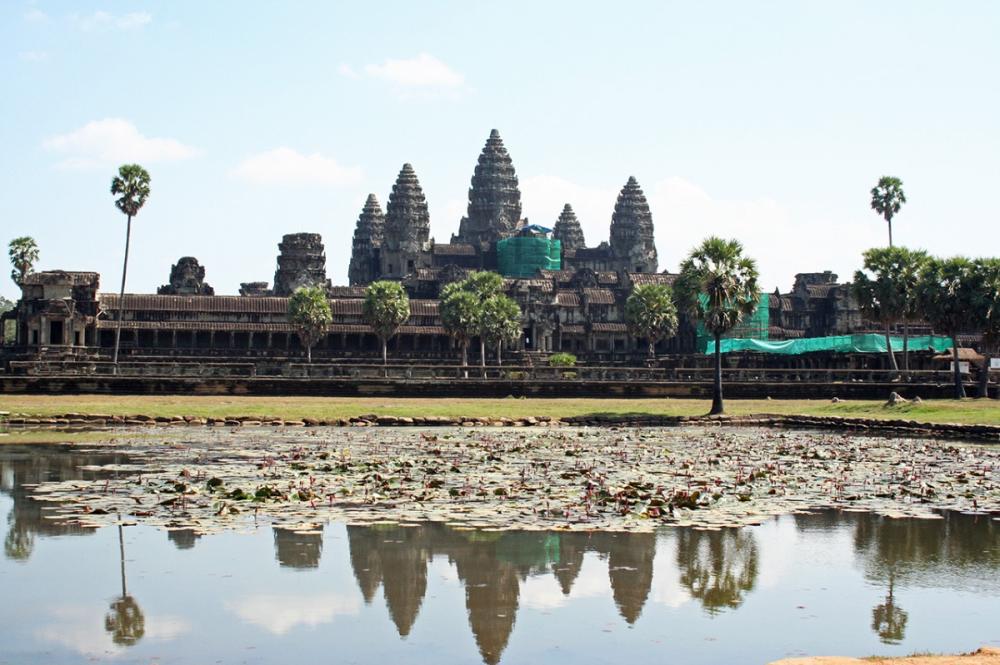
The Angkor Wat Temple in Siem Riep Images by Steve Hare
Our Lifestyle and Leisure Editor, Sharon Cain, and Photographer, Steve Hare, donned their backpacks for an unforgettable journey spanning the former Royal City of Laos, the world’s largest religious building - and a remote island off the Gulf of Thailand.
Luang Prabang: A Spiritual Jewel
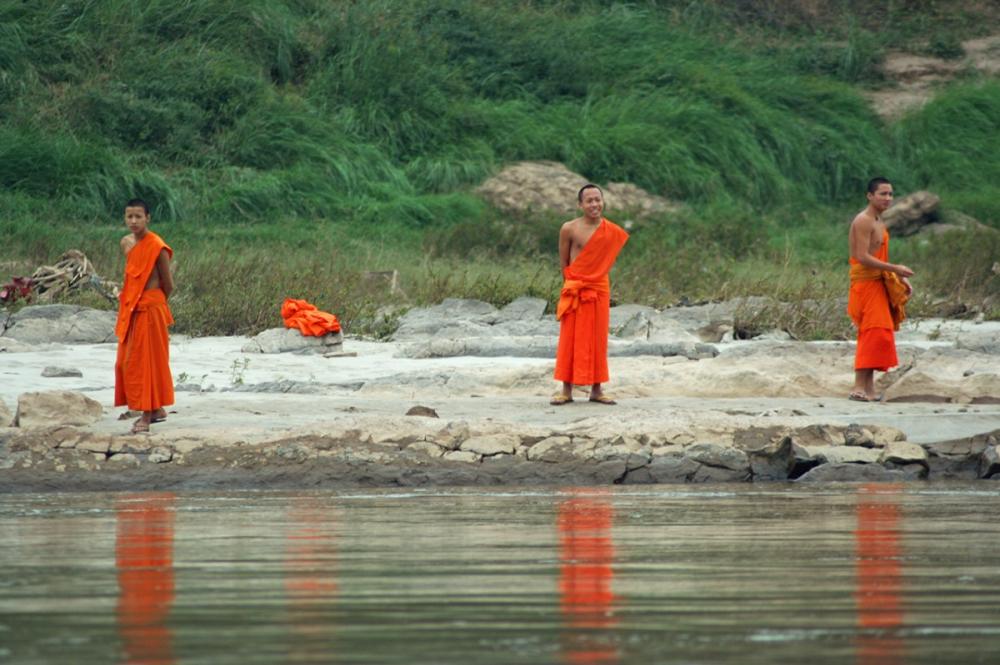
Spiritual, colonial, colourful : Luang Prabang
Located on a peninsula formed by the Mekong, Southeast Asia’s longest river, I could not wait to discover this compelling UNESCO World Heritage Site.
Fusing Lao Buddhist spirituality and impressive French colonial architecture, it lulls visitors into a state of enchantment with its eclectic mix of cultures, history and traditions.
The main religion is Theravada Buddhism, practiced by three quarters of its eight million people - half of whom are monks. Every sunrise sees a riot of saffron robes as Buddhist monks are given alms (food and snacks) by local people in a ceremony dating back six centuries.
Ancient Traditions
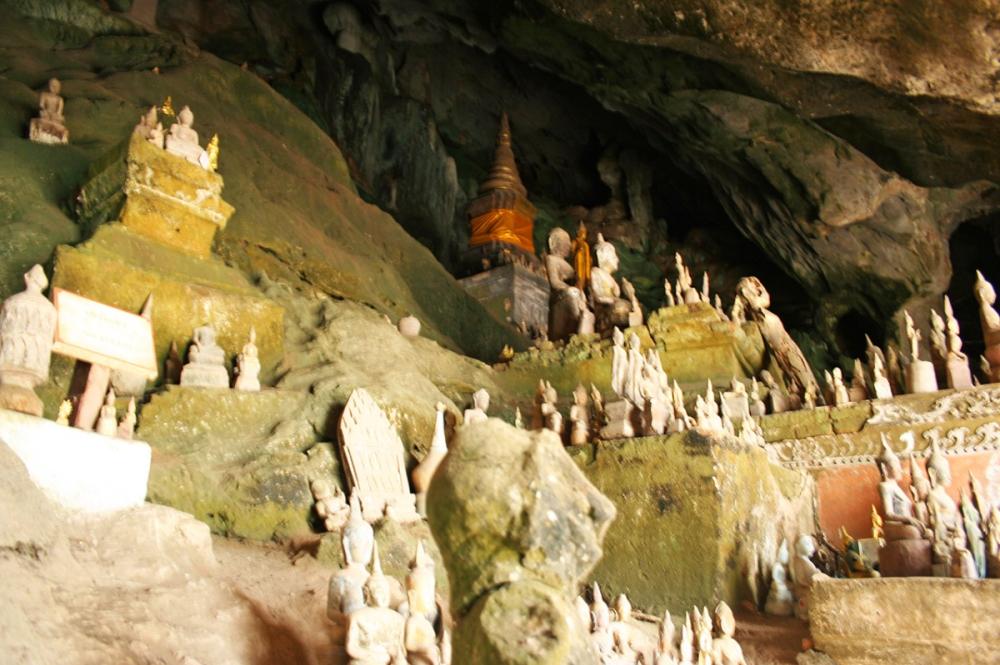
Buddha statues in Pak Ou Caves
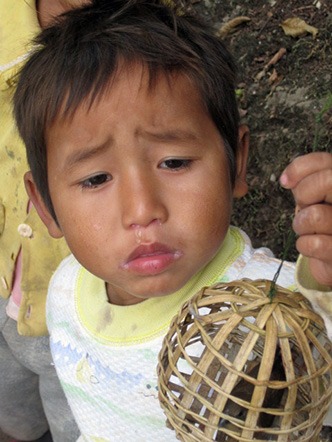
Selling birds is steeped in the country’s culture and traditions
We visited local villages along the Mekong where time stands still, and sad-looking children beseeched us to purchase birds in makeshift wooden cages. Local people buy the birds, pray to Buddha then set them free, symbolising an act of compassion to relieve suffering. The deep-rooted practice, which passes from generation to generation, also provides families with a source of income.
Temple of the Golden City
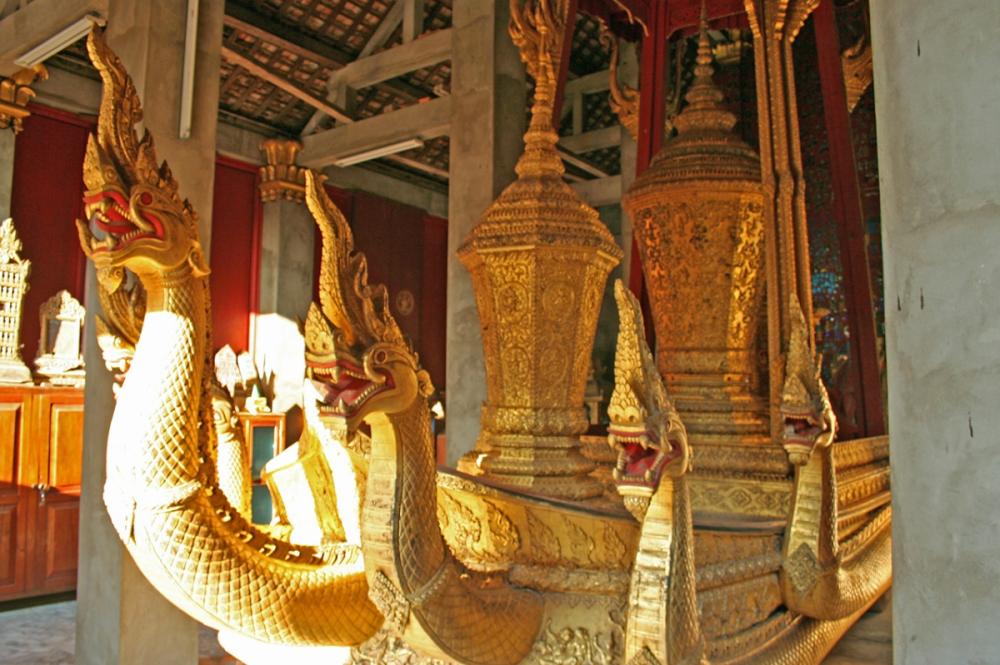
Ornate funeral carriage where former kings are buried
Maintaining its original form, exquisite features include elaborate mosaic patterns, wall carvings, rare Buddhist deities and a 12-metre-tall funeral carriage which contains burial urns for the royal family.
Mekong Sunsets
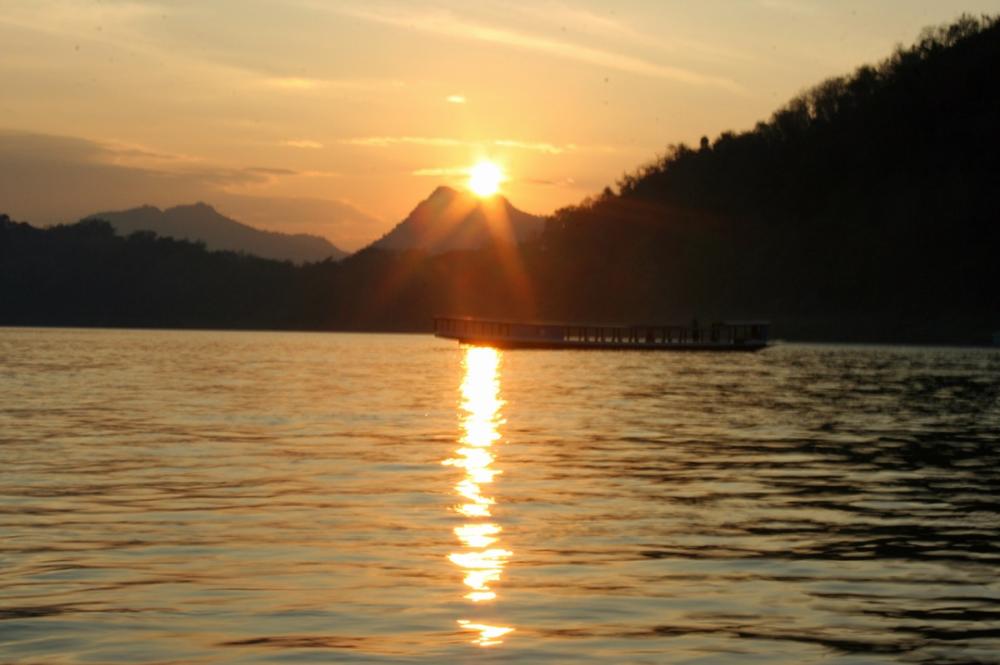
Magical sunset over the Mekong
Even the sun sinking into the Mekong exudes an air of spirituality, presaging the end of another day in the city’s rich tapestry.
Cambodia: A Legacy of Mass Genocide
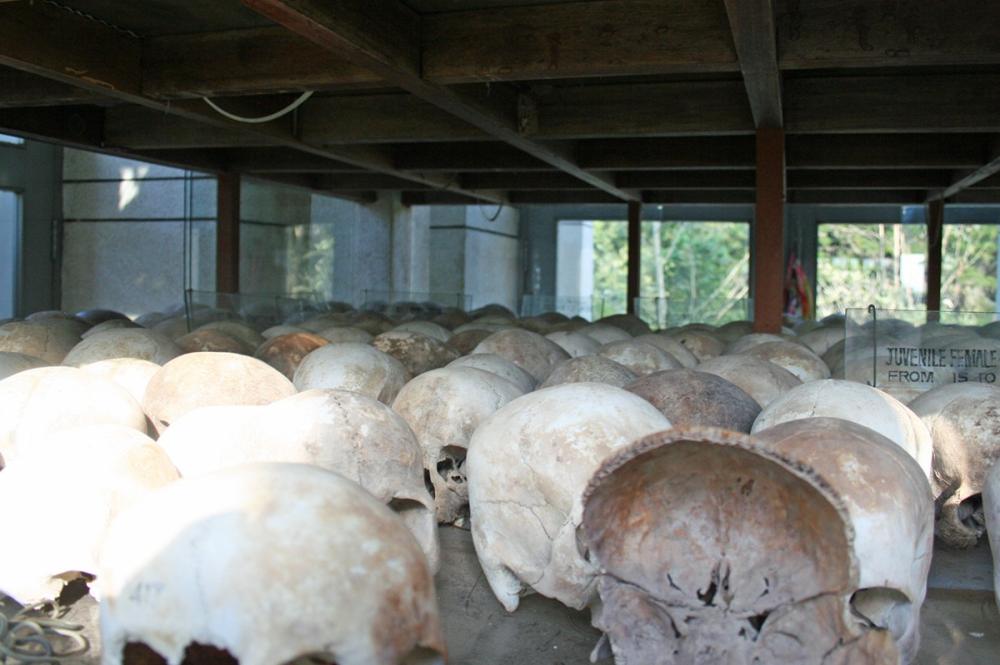
Horror of the Killing Fields
Jangled from a ropey Mekong journey - which deposited us and a raft of backpackers badly sunburned from sitting on a narrow ledge outside the boat in the bustling capital of Phnom Penh - a sense of dread descended. We were here to witness the atrocities of the Killing Fields.
Horrifically, Cambodia has over 20,000 mass grave sites resulting from the genocide committed by the Khmer Rouge between 1975-1979 under tyrannical dictator, Pol Pot. The butchering of up to two million people - men, women, children and babies - by the vicious regime, wiped out almost one quarter of the population.
The absence of the older generation, also called ‘the lost generation’ and ubiquitous in cafes or sitting on doorsteps in towns and cities I’d travelled to the world over, was a stark reminder of the country’s unimaginable suffering.
Memorial’s Salutary Reminder
Choeung Ek, the largest grave site on the outskirts of Phnom Penh, is a sobering experience where the remains of almost 10,000 people were exhumed from the mass graves that litter the former orchard.
A sense of disquiet pervades the site whose centrepiece, a glass memorial stupa, contains the skulls of over 5,000 victims, nearly half of the number of those executed at the site.
It was beyond harrowing to learn that some skulls reveal marks of the trauma they were subjected to before execution, and to see the pits used as mass graves where fragments of bones are evident.
The scale of evil is beyond comprehension, rendering the stupa, a monument to those slaughtered and those who survived, a poignant symbol of hope for the bereft to cling on to.
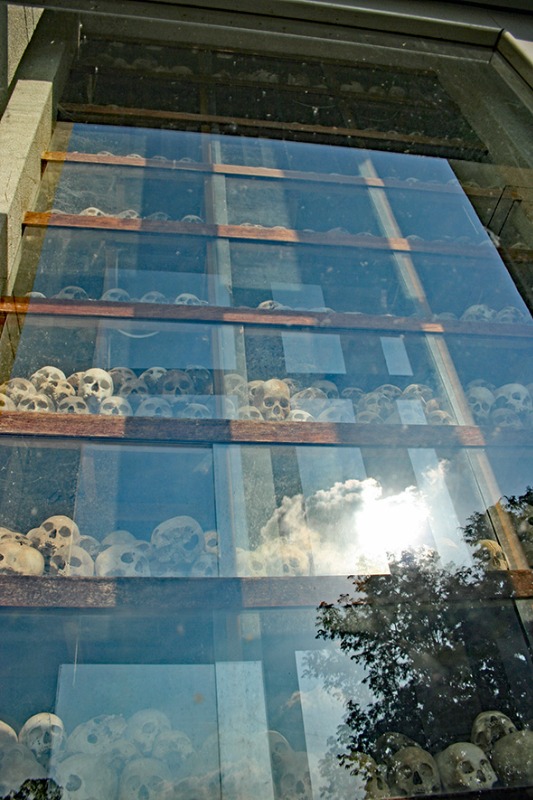
Mass genocide: The Killing Fields
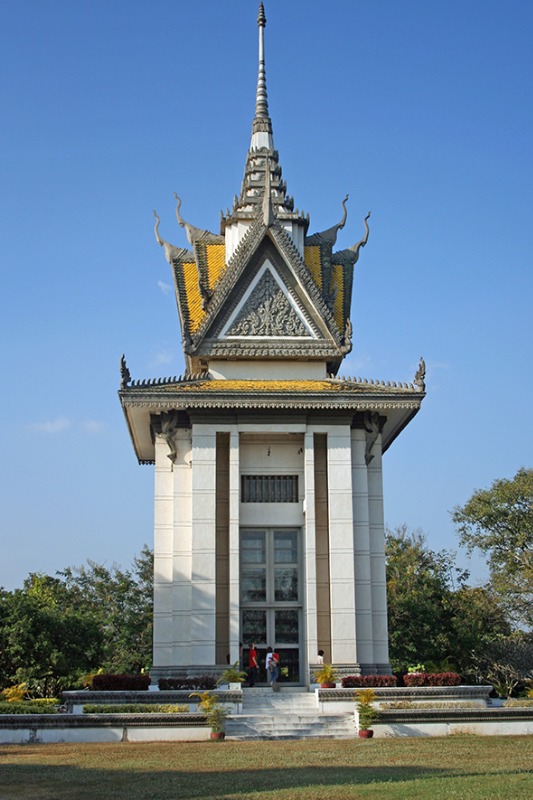
Memorial stupa serves as reminder of atrocities
Angkor Wat: The World’s Eighth Wonder
Delving into Cambodia’s past also uncovers a treasure trove of architectural, cultural and commercial achievements of the Khmer empire - an undisputed pioneering civilisation stretching back to 802.
The iconic 400 acre Angkor Wat temple complex, a UNESCO World Heritage site in Siem Riep, is a proud national symbol and the centrepiece of Khmer civilisation.
The world’s largest religious monument, it was deservedly awarded the status of the Eighth Wonder of the World by Cambodia’s Royal Embassy in London in 2023.
Built in the first half of the 12th century for King Suryavarman II who dedicated it to the Hindu God Vishnu, I’d recommend allocating around 2-3 days to see the complex. Being time poor we aimed to grab the highlights in a day, setting off at 6am. Two hours later the temperature had soared into the 80’s.
Resembling a lotus bud, according to Hindu mythology Angkor Wat’s five dominant towers are thought to represent Mount Meru’s peaks, the gods’ dwelling place. The ingenious structure means you can only see all five towers from certain angles.
Heavenly Nymphs
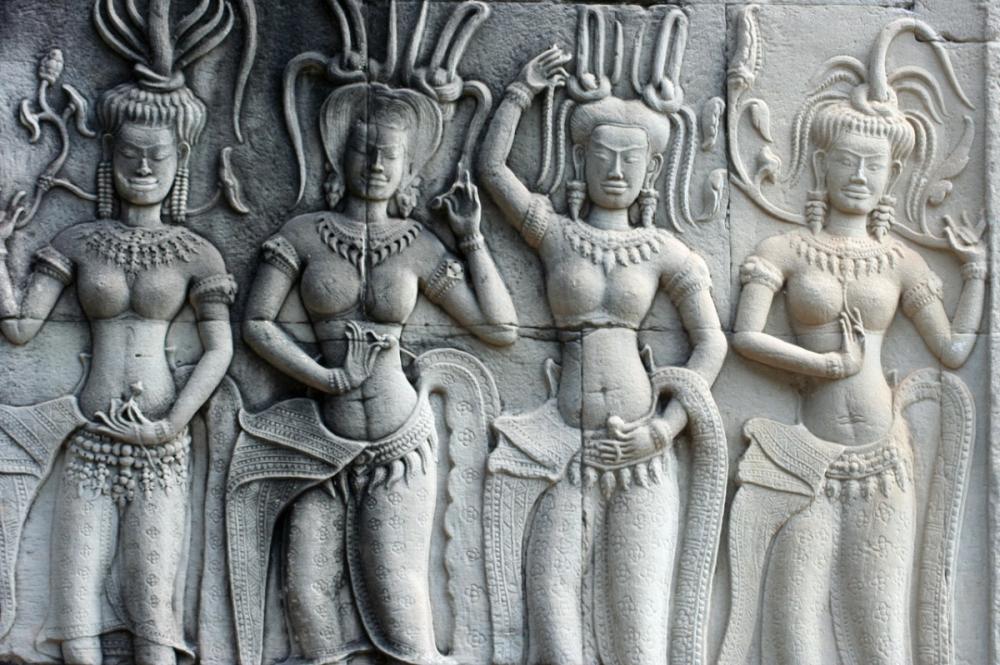
Divine: Celestial Stone Carvings
Epic Battles
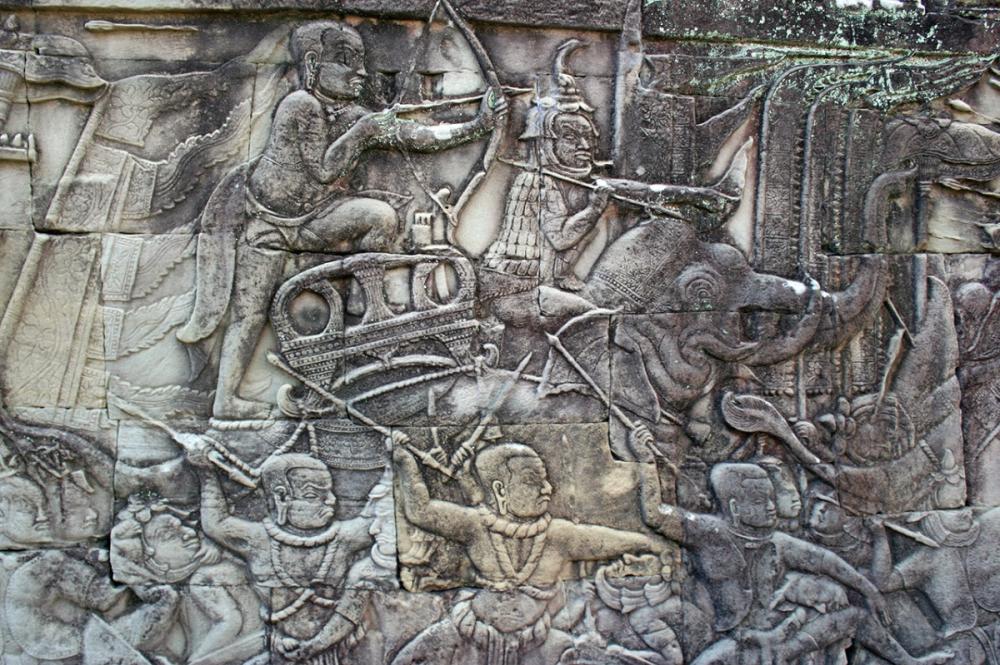
Bellicose past: Bas reliefs depict Angkor warriors
Words like awe-inspiring, overwhelming and thought-provoking do not scratch the surface of the Angkor Wat’s magnificence. I loved every minute, especially the Ta Prohm temple’s mind-blowing silk-cotton trees and strangler figs which featured in Lara Croft: Tomb Raider.
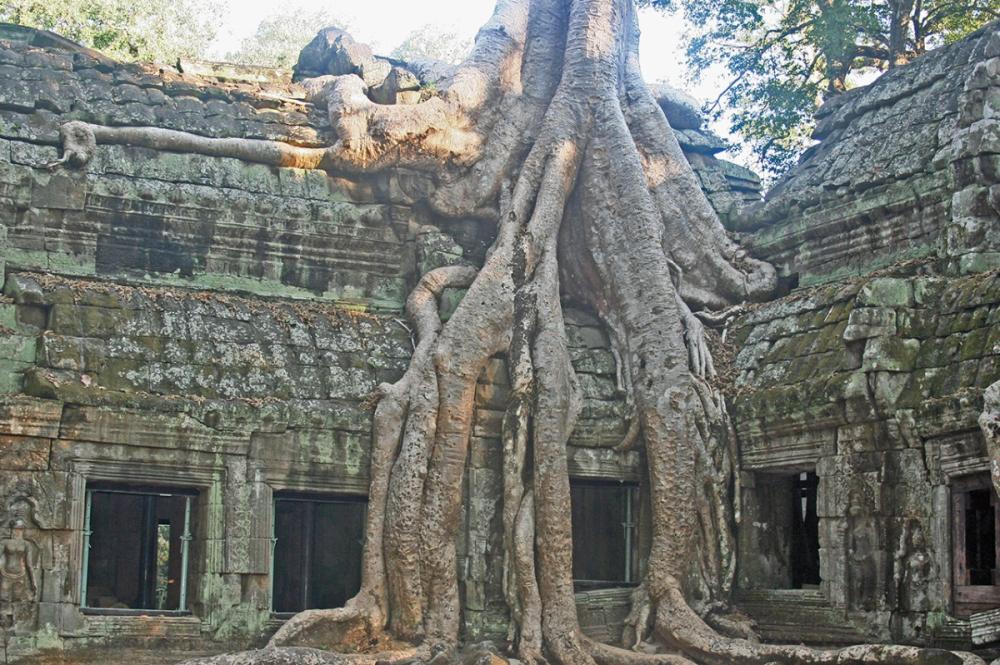
Creeping giants: Silk-Cotton Trees at Ta Prohm Small Temple
Life Source: The Mekong
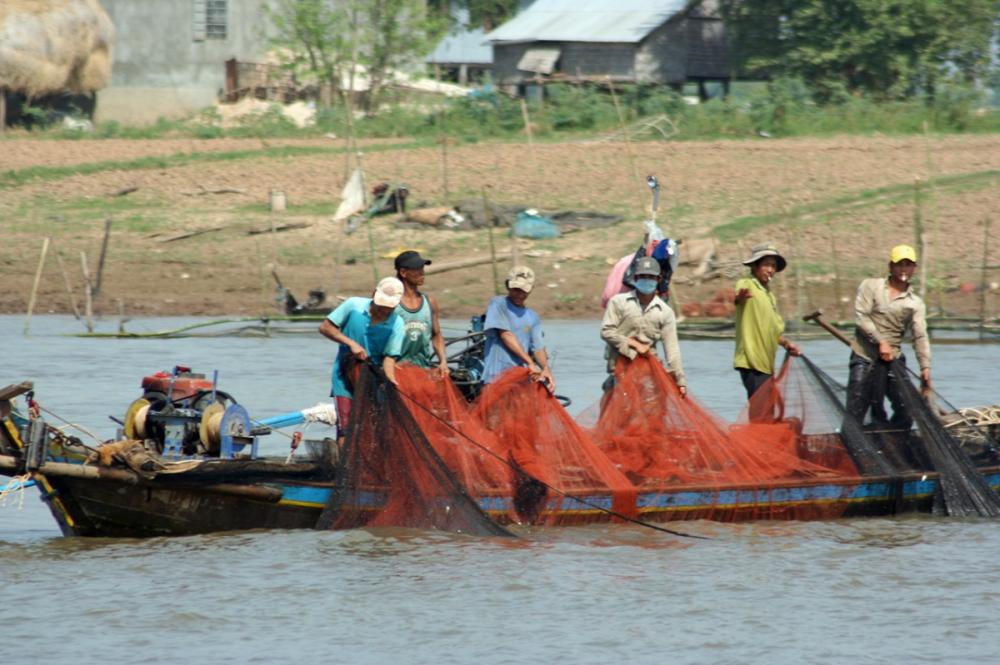
Labour intensive: Fishermen on the Mekong
An incalculable number of livelihoods are dependent on the Mekong River Basin which takes in Laos and Cambodia. Fishing supports a large tranche of the country’s 18 million inhabitants, and the Mekong teems with intriguing species including giant catfish weighing up to 300 kg, snakehead, and Siamese fighting fish. I was hoping to spot a catfish, but the murky water made it hard to see anything.
An abundance of fishing boats plies the river; the fishermen intensely focused on the task in hand and pulling labour intensive shifts of up to 14 hours every day.
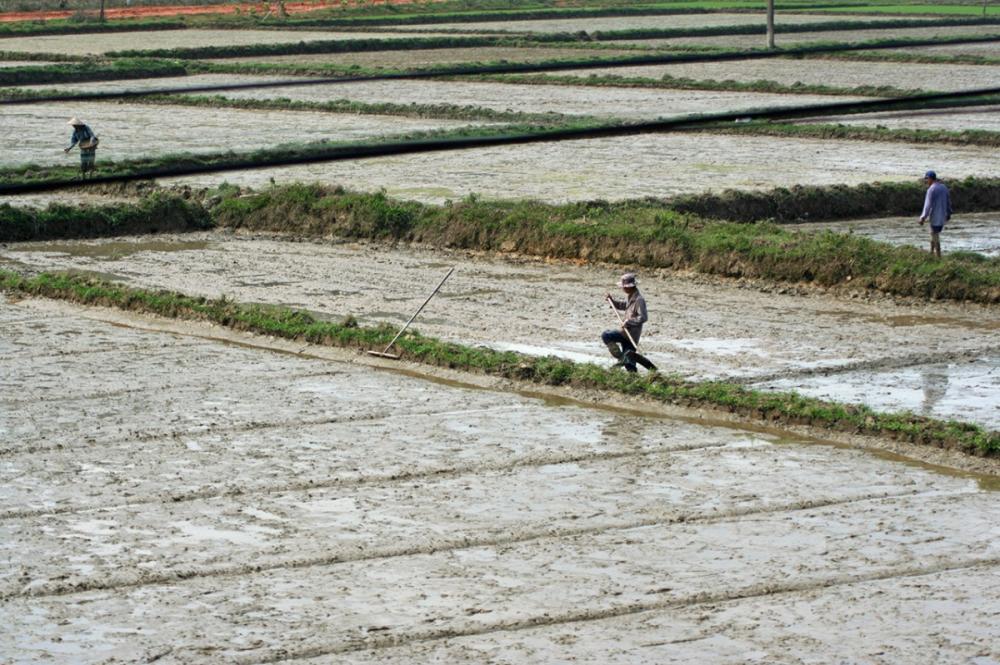
Boosting Rural Employment: Mekong’s Paddy Fields
The changing seasons and backdrops along the Mekong are perfect conditions for paddy fields. Watching the back-breaking work enhanced our appreciation of the tasty meals we sampled.
Terracotta Treasures
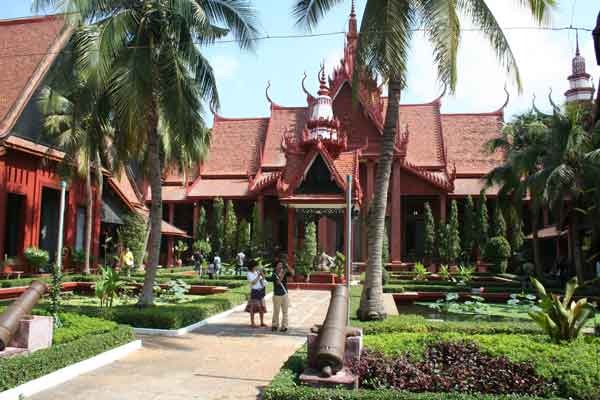
National Museum of Cambodia
They included The Royal Palace and the National Museum of Cambodia, the country’s leading historical and archaeological museum. Striking statues include Cambodian warriors and an eight-armed Vishnu sculpture from the 6th century.
Allow at least half a day to take in the multitude of artefacts including models of traditional Khmer houses, clothing and accessories spanning from ancient times to modern day. A shaded garden with refreshments is a welcome respite and photography is restricted to the central courtyard.
In Search of Paradise
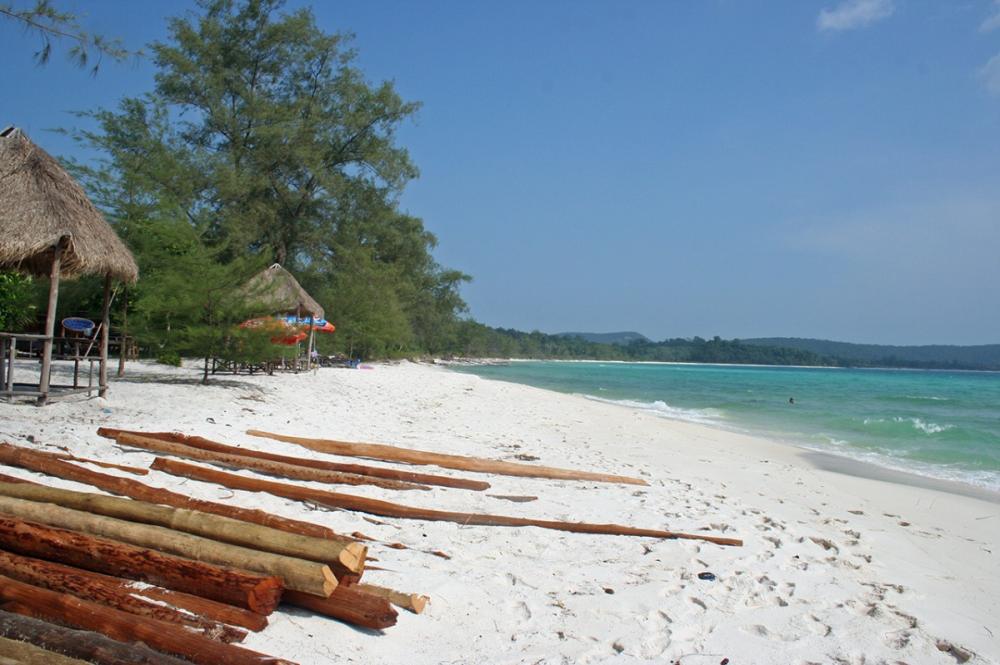
World’s apart: lapping waves on Bamboo Island
The harsh reality was a noisy, tacky and unappealing resort. Drawing on our resourceful natures, we escaped on 30 minute ride in a fishing trawler to Bamboo Island across the Gulf of Thailand, the pungent smell of fish diminishing as we approached our own version of paradise.
With pristine beaches and lush scenery, home for the next three days was a basic bamboo hut, where we woke to the sound of crashing waves.
One shack served seafood which was fantastically fresh. It was so chilled that some backpackers we met had come here for eight days and stayed eight months.
The sense of deep relaxation and wellbeing enabled me to absorb the extremes I had witnessed during our travels across Laos and Cambodia - deeply spiritual and religious countries whose people are inherently kind.
My journey had taken me through gold gilded temples in Laos to Cambodia’s enlightenment which still shines bright in spite of its tortured past.
Sharon Cain and Steve Hare travelled to Laos and Cambodia independently
Airlines flying from Bangkok to Laos include Lao Airlines, Bangkok Airways and Thai AirAsia
The dry season in Laos is December to March
Tourism Laos
Tourists are advised to check Government advice on travel
Cambodia’s peak season is December to February
Tourism of Cambodia
Cheung Ek Killing Fields
Government Travel Advice
Search Results