



search
date/time

Sun, 1:00AM
clear sky
6.9°C
WNW 11mph
clear sky
6.9°C
WNW 11mph
 | Sunrise | 6:24AM |
| Sunset | 5:17PM |  |
P.ublished 10th October 2026
nature
British Garden Centres' Expert Guide To Autumn Containers And Hanging Baskets
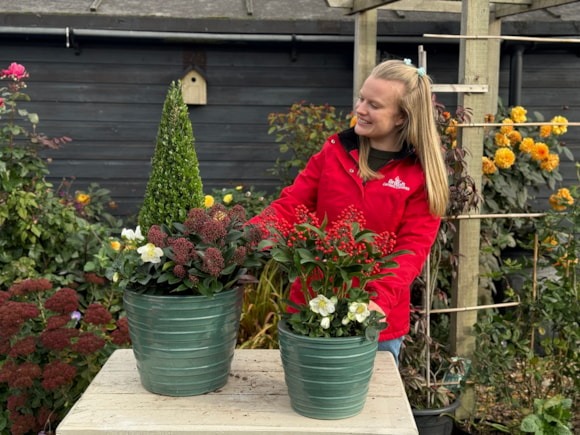
Photo Courtesy of BGC
For height, movement and texture: Add ornamental grasses such as Festuca glauca, Carex buchananii or Panicum virgatum. Their architectural form and colourful foliage bring life to even the greyest day, and they work beautifully in both tall containers and trailing baskets. Autumn is also the perfect time to plant dwarf conifers like Chamaecyparis, Thuja 'Tiny Tim' or Picea 'Conica' as a long-term evergreen thriller, and Carex 'Everest' and 'Frosted Curls' for a softer weeping habit at the edge. Ophiopogon planiscapus 'Nigrescens' will also give any container a dramatic black contrast, whilst Nandina domestica adds fiery red winter foliage.
For evergreen structure and scent: Evergreen shrubs are the backbone of a winter display. British Garden Centres recommend Viburnum, Mahonia, Skimmia, Heuchera and Hebe for their vibrant foliage and winter blossoms. For fragrance, add Daphne, Sarcococca and winter jasmine, which produce clusters of highly scented winter flowers. Winter-flowering heathers in white, pink and purple are also ideal for baskets and pots, providing vital nectar for pollinators.
For a festive glow: Berrying plants bring a luminous touch to late-season arrangements and help birds with an essential food source as the temperatures dip. Callicarpa, Gaultheria, Holly, Pyracantha and Skimmia produce glossy, vibrant fruits that light up containers and hanging baskets through autumn and winter. Cotoneaster is also another excellent compact berrying option for small pots and baskets in your home.
For practical beauty: Finish your display with aromatic evergreen herbs for scent and taste through the winter months. Rosemary, sage, thyme, lavender and mint are resilient, fragrant and perfect for mixed containers close to the kitchen door.
Plant now for spring: Autumn is prime bulb-planting time, and containers and hanging baskets are the perfect place for them. By planting spring bulbs like crocus, daffodils and tulips now beneath your winter bedding, you create a clever double display that keeps going. You can also add muscari, miniature iris reticulata, hyacinths for scent and alliums for the lasagne layers, and miniature daffodils like 'Tête-à-Tête' and dwarf tulips for hanging basket displays come spring.
How to care for autumn and winter containers
Position your pots and baskets in a sheltered spot, such as under eaves or against a south‑ or west‑facing wall, to reduce wind chill and heavy rain impact. We recommend you insulate the pot rather than just the plant by wrapping thin‑walled containers in horticultural fleece or bubble wrap and keeping them on pot feet so water can escape.
Mulch the surface with a thin layer of compost or bark to keep it at a moderate temperature, protect from cold blasts and keep moisture around the roots. Most outdoor pots get enough rain from November to February, but check those under cover or against walls and water if the compost feels dry. You do not need to feed through the coldest months but start with a light top‑dress of fresh compost and slow‑release feed in early spring as growth restarts.
It is also a good thing to keep on top of removing spent flowers and any rotting leaves regularly to keep displays tidy and reduce disease risk, so your plants stay in tip-top shape into winter and beyond.
Julian Palphramand, Head of Plants at British Garden Centres, said: “Autumn and winter containers are the best way to stop your garden from looking a bit sad when the weather turns. If you mix up some tough bedding plants with structural evergreens and tuck some spring bulbs underneath, you get a rolling display that actually handles the British weather and keeps your doorstep looking brilliant all the way through.”
The shortened address for this article is: newspub.uk/02173