



search
date/time

Tue, 10:00AM
light rain
15.8°C
WSW 5mph
light rain
15.8°C
WSW 5mph
 | Sunrise | 6:14AM |
| Sunset | 5:30PM |  |

Artis-Ann
Features Writer
P.ublished 22nd February 2025
arts
A Woman’s Place: The Manual For Good Wives By Lola Jaye
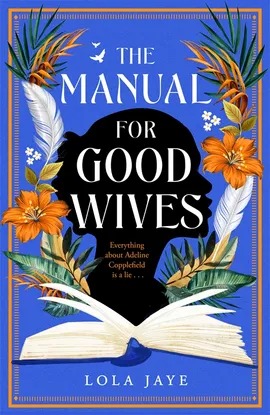
The violence in the prologue of The Manual for Good Wives contrasts with the tender young love expressed in chapter one but is a portent of what is to come. Olu and Temi are young and in love. They are, however, our very own Romeo and Juliet, given that she is an African princess with a duty to fulfil and ‘about to belong to another man’ and he is a humble commoner, albeit well read and ambitious.
This historical saga begins in Africa in 1860 where problems with the British threaten the existence of Temi and her royal family while her impending arranged marriage to a local chief who is ‘older than [her] father’, threatens her happiness.
The narrative shifts to England in the present day: a marriage proposal, unlooked for and unwelcome, the atmosphere tense and uncertain, filled with a veiled threat. Ross wants his own way and Landri is shaken to realise their plans for the future do not align.
There, they make a success of their lives by dint of hard work and business acumen. Theirs is a true partnership which is unusual and largely unrecognized by others.
After harsh treatment at the hands of her abusive husband, Temi is reunited with Olu and together, they flee their homeland and make the difficult journey to England, leaving her child with the one woman she trusts to look after her. There, they make a success of their lives by dint of hard work and business acumen. Theirs is a true partnership which is unusual and largely unrecognized by others. They are married, able to buy a beautiful home and, when the time is right, the arrival of a child of their own completes their happiness.
Nevertheless, life in Victorian Britain is almost as much a patriarchy as the one Temi has left and once tragedy strikes, Temi discovers how hard it is for a woman to survive on her own, especially a black woman who is treated with suspicion by many of her own sex, let alone by men. Victorian England was rife with racism and sexism; even Charlotte Bronte – among others – had to publish her work under the male pseudonym, Currer Bell.
The ending comes swiftly and unexpectedly, tinged with both sadness and joy, but it is the only ending there could be.
The abuse a woman may suffer at the hands of her husband need not be physical. Coercive control is a modern phrase and neglect is more often acknowledged today than previously. Both Landri and Temi understand. Divorce was not so common even fifty years ago but that was mainly because women had no option. ‘Upon your marriage, your worldly goods will become your husband’s’ explains The Manual for Good Wives. How then could women support themselves if they chose to divorce an abusive husband or leave an unhappy marriage? Temi is, however, a true survivor. Unable to return home to Africa, with Olu lost to her and Edward, her third husband, proving to be a monster, she has to find a way out. She proves herself resilient and resourceful, ‘a radical babe’.
The characters are believable, their emotional relationships realistically complicated and their ability to overcome the obstacles life throws at them, admirable.
The Manual for Good Wives is integral to the story; each chapter begins with an extract from it and its significance becomes clear about half way through when the identity of its author is revealed. Like many Victorian scripts, we can laugh at the advice now, but only so much.
This is a novel which needs to be read on more than one level: as a simple narrative, it is poignant, captivating and thoroughly enjoyable. The characters are believable, their emotional relationships realistically complicated and their ability to overcome the obstacles life throws at them, admirable. The cameo characters are as vivid and important as the main protagonists and create a full ensemble. The social message delivered is equally important. The cultural differences (of all sorts) which are highlighted, the lessons we have learned, and should continue to recognise, are both thought-provoking and compelling.
Note to Ms Jaye: I would have liked a simple copy of the family tree printed, perhaps, at the beginning, to more easily keep track of the generations.
Also by Artis-Ann ...
A Tale Of Death And Life: The Mourning Necklace By Kate Foster…And All That: Bayeux Tapestry The Epic Poem By Martin KiszkoIn For A penny…: In A Summer Season By Elizabeth TaylorThe Suitability Of Love: No Fond Return Of Love By Barbara PymThe Power Of One Voice: Camino Ghosts By John GrishamThe shortened address for this article is: newspub.uk/01tq8