


search
date/time

Wed, 4:00AM
overcast clouds
9.7°C
S 6mph
overcast clouds
9.7°C
S 6mph
 | Sunrise | 6:42AM |
| Sunset | 4:54PM |  |

Steve Whitaker
Features Writer
@stevewhitaker1.bsky.social
P.ublished 2nd May 2018
arts
Prometheus In The Scrapyard: The Unaccompanied By Simon Armitage
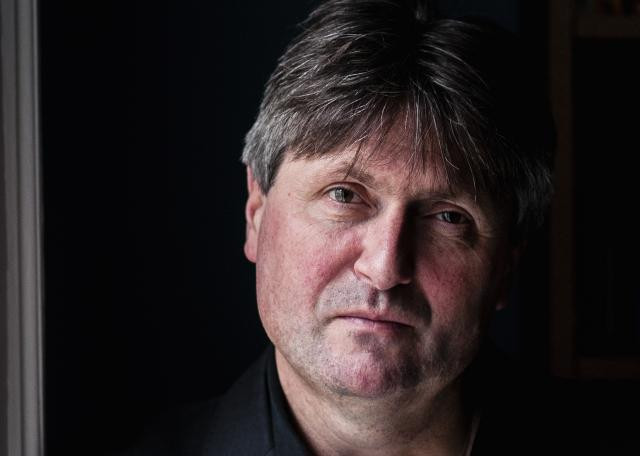
Simon Armitage
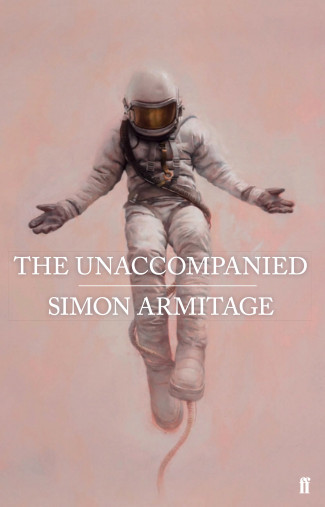
The poet's currency in his latest collection is, as ever, rich in local vernacular, and especially the now more or less extinct 'folklore' of the staple West Riding industry of woollen textiles. The arcane nomenclature of employment clearly fascinates Armitage, as it does his mentor, Tony Harrison, and the reader would need to have been indigenous to a bygone Huddersfield to recognise the job titles which used to litter the employment columns of the town's Daily Examiner every Thursday.
The absurdity of 'Greasy Percher' - a name so arcane that my Word software cannot cope with it - is one such mill-related occupation. But he puts it to fine commemorative use in the poem 'Emergency' whose title nods both to the subject-matter - time's degradation and retrogression of material signifiers, including redundant fire stations - and to the crying need for some sense of purpose in the new wasteland.
Armitage's deltaic reasoning flows outwards from an unnoticed suicide, to empty forecourts, to changes of architectural designation, to a depressing retailing of inventories of decline. Emerging in an ocean of the moronic and the mundane, the poet nails the modern urban condition in a series of acutely-observed images:
The bank's gone as well,
and also the post office,
though in the store-cum-off-licence
you can sign a gyro
with a string-and-sellotape-tethered
half-chewed biro
or deface a scratchcard
or sell a bullmastiff.
The poem's eight octets are strangely mobile, roving over the hinterlands of the past and of the narrator's own forefathers. The concluding existential question - 'What is it we do now?' - is borne out of an indivisibly personal connection, and is as nearly devoid of hope as the terrible, pained expressions on the faces of the victims in Goya's 'Third of May, 1808'.
Also by Steve Whitaker...
Poem Of The Week: Facing The Music By Mairéad ByrneVenus At Midnight: The Amygdala Safari By Carmella de KeyserReview: Peas On Your Knees - A Life In The Poems Of Michael RosenPoem Of The Week: From Cheshire By Kit WrightPoem Of The Week: Among The Talk And The Laughter By Norman MacCaig (1910-1996)You can make bigger pictures of the miniature universes of Armitage's poems. He is a poet of 'things' - objects as symbols of evanescence and decline; his camera/eye alights randomly on cornucopias of 'product' and mundanity. And sometimes his mastery of the satirically caustic deflects the sharper blade of pessimism.
An anachronistic visitor to the aisles, Armitage's narrator in 'Poundland' acts as the 'Martian' of Craig Raine's poetics. Seeing the shop's goods for the first time, wide-eyed, incredulous, and in the guise, and language, of a lost Odyssean traveller, he wanders through this commercial landscape as open to suggestion as a guided visitor to Hell. And there is real humour in amongst the heaving shelves of consumables you never knew you needed:
Then emerged souls: The duty manager with a face like
Doncaster,
mumbling, 'For so much what shall we give in return?'
The blood-stained employee of the month,
sobbing on a woolsack of fun-fur rugs,
many uniformed servers, spectral, drifting between aisles.
Inhabitation of narrative character is a not infrequent conceit in The Unaccompanied. In the deeply moving 'Avalon', the terminally insane composer and poet Ivor Gurney escapes the bounds of the Royal London Mental Hospital in Dartford with a freeform mind excursion to San Francisco, 'having overshot Gloucester / by several million strides, having walked on water', in a gesture, almost, of Conquistadorial defiance. His mental consummation is fabulous in the most rewarding sense - '...I face west and let the Pacific slip / in blazing glory over the planet's lip'. A similar resurrection is sought by the gold digger in the poem 'The Claim', whose yearning becomes careless of time in a final transcendent moment.
A paradoxical yearning to be elsewhere, or more especially, to be somewhere 'other' than here, characterises Armitage's tone. A sense of dislocation from the world's increasingly fractured condition is embodied here, as elsewhere, in a poetic detachment which is tempered, throughout, by compassion. The languidly beautiful 'Last Snowman' charts the depressing precipitation of climate change through the figure of an unanchored snowman, drifting inexorably over oceans like a shrinking iceberg, as insignificant as Icarus' fall into the sea in Auden's 'Musée des Beaux Arts', and as impervious to the ignorance which signifies human blindness:
From the buffet deck
of a passing cruise liner
stag and hen parties shied
Scotch eggs and Pink Ladies
as he rounded the stern.
He sailed on between banks
of rubberneckers
and camera lenses
into a bloodshot West.
A sense of time's passing, and the sadness which inheres to the transient, are more than totemic in Armitage's passage through changeful landscapes. In near perfect metaphors which act to reinforce his purpose, the poem 'The Present' captures the essence of the temporary, and the unattainable. A walk on the moors yields 'no sign of the things I came here to find', whilst the 'six-foot tusk' of an overhanging icicle, which melts in the narrator's grip, comes to figure for the poet's wider intention. The feel of glacial history locked in the prism of the ice's 'weird lens' cannot, in the end, be vouchsafed his daughter. The crushing sadness of the centuries is embodied in the breaking of continuity: 'I open my hand / and there's nothing to pass on, nothing to hold.'
But it is Armitage's arresting powers of observation, his ability to convey wider meaning through the kind of detail most of us miss, and his control of the formal architectures of expression, that distinguish his poetics. If The Unaccompanied is a protracted elegy, then glimpsed, offbeat, but highly focused moments are its underpinning: the nondescript nurse at a bus shelter conceals the commitment of a figure who, elsewhere, will 'hold the hand of cancer till the line goes flat' ('Nurse at a Bus Stop'); the skinny, frozen kid on Wakefield's station platform blithely refusing the offer of a coat, and in doing so underlining a hopeless generational gulf ('The Ice Age'); 'The kiss of life / from the lips of a flask' after a night's 'bivvying out' in the Hughesian, transcendent 'Glencoe'; and the psychopathic 'blank face' of serial killer Robert Maudsley, in glass-cased isolation at Wakefield Prison ('Solitary').
Armitage's early career as a Probation Officer may well have taken him to the gaol at Wakefield; the acuity of his narrator's observation looks first-hand. But we may be certain, that the fine poem 'Prometheus' is drawn from life. The theft of a spark-plug from a motor scrap yard is a commemoration not only of the warmth of the relationship between father and son in metaphors of Promethean fire, but an inscribing of life itself in a recreation of the power of Michelangelo's divine arc in the everyday:
and below it a gap
where the two electrodes didn't quite touch,
like the finger of man and the finger of God.
Within that divide, in the daylight there,
the glint in his eye, the makings of fire.
Armitage's nose for inference, radar for nuance, and sense of existential direction continue to astonish. The Unaccompanied is amongst his very finest work.
The Unaccompanied is published by Faber & Faber
The shortened address for this article is: newspub.uk/0fpo