



search
date/time

Wed, 1:00AM
light rain
17.3°C
SW 6mph
light rain
17.3°C
SW 6mph
 | Sunrise | 3:31AM |
| Sunset | 8:38PM |  |

Phil Hopkins
Commissioning Editor
@philhopkinsuk
P.ublished 6th March 2019
arts
Goodnight Sweet ‘Friend’ & Flights of Angels...
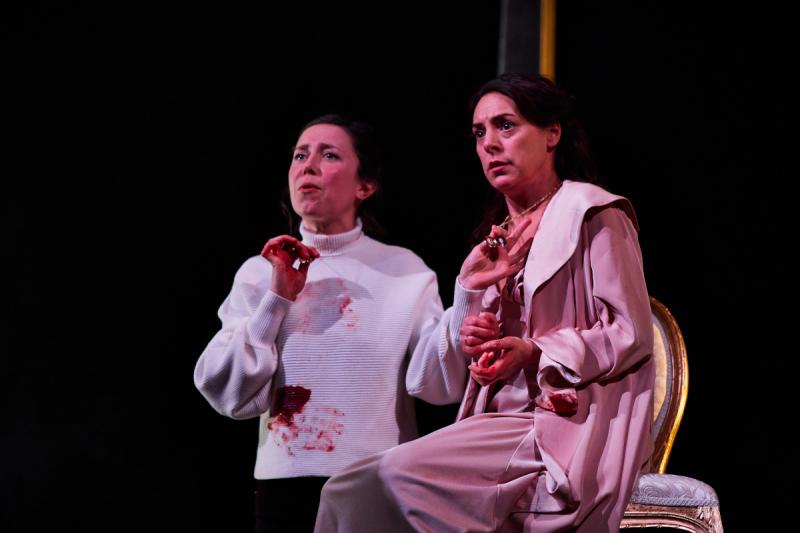
Tessa Parr (Hamlet) and Jo Mousley (Gertrude). Photography by David Lindsay
On the one hand there were some great performances whilst on the other it felt like one step too far turning the Prince of Denmark into a Princess, his father Polonius into a tweed wearing Joyce Grenfell, and his bosom buddy Horatio into yet another gender bender character, this time a woman with dreadlocks. So, whose idea was this, Leach’s or Dramaturg Jacqui Honess-Martin who is so vocal in the programme? “There is no doubt that re-gendering roles changes Shakespeare’s plays. It explodes them up to new possibilities, new themes and, hopefully, new cultural theories.” Really?
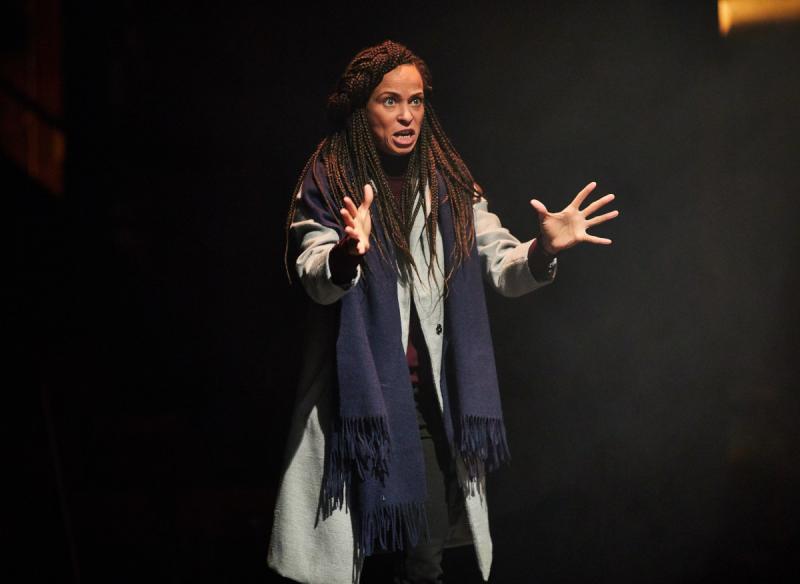
Crystal Condie (Horatio). Photography by David Lindsay

Joe Alessi (Claudius) and Tessa Parr (Hamlet). Photography by David Lindsay
Nevertheless, personal feelings aside, there were some sterling performances.
Tessa Parr as Hamlet is a great actress, works so hard and is seamless in her delivery; it would be wrong to judge her unfairly just because she is a woman playing such an iconic male role. She was excellent even if Dann Parr as Laertes did tower over her in the final sword fight. And I DO like Joe Alessi in his various roles, this time he was the murderous Claudius, whilst Susan Twist brought some beautifully paced humour to the part of Polonius.
I am sure that Amy Leach knew this was always going to be a contentious production and she’s right on that one. Maybe I would have been a little more forgiving if Hamlet had remained a Prince but a Princess? Yes, men did play female parts in Elizabethan times and I could have lived with a 21st century take on that but, for me, re-gendering such iconic characters was too big a shift.
Also by Phil Hopkins...
The Price Of Danish HappinessBodyguard Understudy Steals The ShowOh Mummy! Perilous Pyramids & The Awful EgyptiansTerrible Tudors Steal The ShowComedy Ballet Masters Still Trockin' 50 Years OnLeeds Playhouse, until Saturday 30th March 2019
This article has prompted a much larger public response than usual. In particular many respondents have taken exception to the use of the term 'gender bender'.
The letter below is a direct response to this article and is presented here in full. Although critical of the article and the YT's stance in general, we are most grateful for the time and effort required to write this thoughtful piece.
For the sake of clarity, I (the editor) do not agree with the sentiments expressed in this letter. I believe them to be a misinterpretation of the review, and of the reviewer's intentions, and it implies personal characteristics of the reviewer which, I believe, do not exist.
However, please read the article, and this response, and form your own view. And do go and see the production at Leeds Playhouse. It is excellent.
To the Editor,
I write in response to the review of Leeds Playhouse’s production of Hamlet (Goodnight Sweet ‘Friend’ & Flights of Angels..., 6th March 2019). I do not wish to discuss the verdict on the quality of the production, nor the quality of the review. Those of your readers fortunate to attend this production can judge the former for themselves, and the quality of the review speaks for itself. However, I do wish to take issue with prejudicial attitudes expressed in the review which are inappropriate anywhere, but particularly in a digital newspaper wishing to be a ‘voice of the North’.
The term ‘gender bender’ is often perceived as offensive (the first citation for it on Google UK is by the British National Party). Even if its appropriateness here is debatable it is an early indication of a discomfort and indeed distaste for a production where concepts of gender and sexuality are interestingly explored. We are told the reviewer rolled his eyes at ‘a girl on girl moment… with some intense kissing’. If this was the fifth production of Hamlet seen this year exploring these themes some weariness might be understandable. Instead it betrays an unwillingness to engage with the production, and attitudes easily seen as homophobic.
The review then generously notes it would be wrong to judge Tessa Parr as Hamlet unfairly ‘just because she is a woman’ and notes she was ‘excellent’ even if Laertes did tower over her. The message is clear, Tessa Parr would have delivered Hamlet better if she was a man and taller! This review seems to have difficulty with women as well as with sexuality. A careless remark betraying an inability to see a black woman with beautiful braids without mistaking them for dreadlocks (which look very different and have specific cultural and religious significance) completes a hat trick of cultural prejudice slipping out.
I do not dispute the right of a review to recommend a production or not – that is its purpose. I do dispute the necessity of expressing this in a way that leaves a sour taste of underlying misogynistic, homophobic, and racist attitudes. It may be your newspaper, staff and sub-editors do not hold these attitudes nor intend to express them, but the language used and the review’s conclusions leave an alarmingly strong impression.
The review admits a bewilderment with the production and that personal feelings influenced the response described. It seems the review is also bewildered by the radical idea, begun in the seventeenth century, of cutting and adapting Hamlet to reflect contemporary realities. This is undoubtedly a Hamlet fit for the twenty-first century, but I fear your review may not be.
Yours faithfully,
Chris Powell, Leeds